See how this new bamboo cooking utensils set can transform your kitchen. Learn the simple secret to durable, eco-friendly tools.
Tchiki Davis, M.A., Ph.D.
*This post may contain affiliate links. If you click and make a purchase, we may earn a small commission at no extra cost to you.
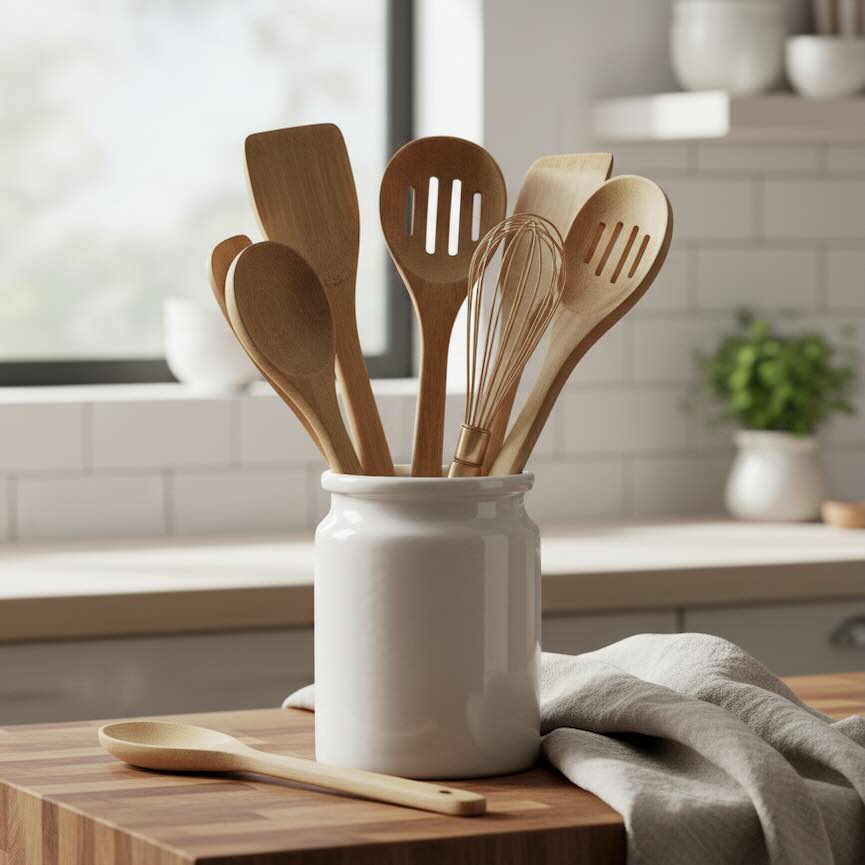
Your cooking tools come into direct contact with the food your family eats, making them a critical consideration for anyone seeking to reduce toxic exposure. Plastic utensils can leach chemicals into hot foods, while metal tools may scratch your cookware and react with acidic ingredients. Even wooden spoons and spatulas often come from unknown sources, potentially treated with questionable finishes or pesticides.
If you're building a healthier, more sustainable kitchen, bamboo cooking utensils offer an exceptional alternative that addresses both health and environmental concerns. These natural tools provide safe food contact without the risks associated with plastic or chemically-treated wood.
Bamboo cooking utensils have gained popularity among health-conscious home cooks for good reasons. Bamboo grows rapidly without pesticides, making it one of the most sustainable materials available. The natural properties of bamboo create strong, durable kitchen tools that resist heat, moisture, and bacterial growth better than many alternatives. Bamboo kitchen tools don't scratch non-stick cookware, won't conduct heat to burn your hands, and naturally resist staining and odor absorption. Beyond practical benefits, choosing bamboo utensils supports regenerative agriculture and reduces reliance on plastic or slow-growing hardwoods. This comprehensive guide explores why bamboo cooking utensils deserve a place in your eco-friendly kitchen, covering everything from bamboo's unique properties to real user experiences, safety considerations, and how these sustainable tools compare to other options on the market.
The science behind bamboo cooking utensils starts with understanding bamboo itself. Though it looks like wood, bamboo is actually a grass—the fastest-growing plant on Earth. Some species grow up to three feet per day, reaching maturity in just 3-5 years compared to 20-50 years for hardwoods. This rapid growth occurs without requiring replanting, pesticides, or fertilizers. The mechanism of bamboo's sustainability lies in its root system, which remains intact after harvesting and produces new shoots continuously.
Bamboo's cellular structure gives it remarkable strength despite being lightweight. The plant evolved to bend without breaking in storms, creating natural flexibility combined with impressive tensile strength. This mechanism makes bamboo kitchen tools durable enough for daily cooking tasks while remaining gentle on cookware surfaces. The promise of bamboo cooking utensils includes this perfect balance of strength, sustainability, and functionality.
One of bamboo's most impressive features is its inherent antimicrobial nature. Bamboo contains a substance called "bamboo kun," a natural antimicrobial agent that protects the living plant from pests and bacteria. Research shows this property partially transfers to finished bamboo products. The science reveals that bamboo cooking utensils naturally resist bacterial growth better than plastic or some wood alternatives.
The mechanism involves bamboo kun's molecular structure, which disrupts bacterial cell membranes. While not as powerful as chemical antimicrobials, this natural resistance helps keep your bamboo kitchen tools cleaner between washes. The promise isn't that bamboo is self-sanitizing—you still need to wash utensils properly—but rather that they don't harbor bacteria as readily as plastic cutting boards or wooden spoons from other materials.
Understanding how bamboo handles kitchen conditions reveals why it makes excellent cooking utensils. Bamboo has lower moisture absorption than most woods due to its dense cellular structure. This mechanism prevents the swelling, warping, and cracking that plagues wooden kitchen tools. Your bamboo cooking utensils maintain their shape and integrity through repeated washing and use.
Heat resistance represents another key advantage. Bamboo's silica content—up to 70% in some species—creates natural heat resistance. The science shows bamboo withstands higher temperatures than many plastics without degrading or releasing chemicals. This property makes bamboo utensils safe for stirring hot foods without concern about melting or chemical leaching. The promise is kitchen tools that perform reliably in demanding cooking conditions.
The remarkable strength of bamboo cooking utensils comes from the plant's vascular bundle structure. Unlike hardwoods with concentric growth rings, bamboo has vertical fibers running along its length, reinforced by horizontal fibers at nodes. This mechanism creates a natural composite material stronger than many hardwoods. Bamboo's tensile strength rivals steel in some applications.
For kitchen tools, this translates to utensils that resist breaking, splintering, or bending under normal use. The science demonstrates that properly made bamboo cooking utensils can outlast plastic, silicone, and even some metal alternatives. The promise is long-lasting, durable kitchen tools from a rapidly renewable resource. Your bamboo utensils work reliably for years while maintaining their structural integrity.

When you first handle quality bamboo cooking utensils, several things become immediately apparent. The natural warmth of bamboo feels pleasant in your hand—not cold like metal or sticky like some plastics. The weight is substantial enough to feel sturdy but light enough for comfortable extended use. The smooth finish glides easily in cookware without catching. These tactile qualities make bamboo kitchen tools genuinely pleasant to use.
Reviews across Amazon consistently mention this superior feel. Users describe bamboo utensils as "perfectly balanced," "comfortable to grip," and "substantial without being heavy." The immediate results include more enjoyable cooking experiences. Parents appreciate that bamboo spatulas and spoons don't conduct heat, eliminating the need to leave tools in hot pans where handles become scalding.
The critical performance metric for cooking utensils is how well they function during actual meal preparation. Bamboo cooking utensils excel across various tasks. Bamboo spatulas effectively flip delicate foods without tearing. Spoons stir thick sauces and batters without bending. Tongs grip firmly without damaging tender vegetables. The natural flexibility of bamboo provides just enough give for effective food manipulation without excessive flexing.
Reddit's cooking communities share detailed performance experiences. Home cooks report that bamboo kitchen tools handle high-heat stir-frying, simmering sauces, and vigorous mixing equally well. The natural non-stick quality means food doesn't cling to bamboo surfaces as much as some plastics. Users note that bamboo utensils transition seamlessly between different cooking methods—the same spoon that stirs pasta water can safely scrape fond from a hot pan.
Extended use reveals the true quality of bamboo cooking utensils. Reviews from long-term users provide valuable insights. Quality bamboo utensils typically last 2-5 years with daily use before showing significant wear. Some users report bamboo tools lasting even longer with proper care. The performance remains consistent throughout this period—bamboo doesn't degrade functionally the way plastic warps or cracks.
Amazon reviews frequently mention durability exceeding expectations. Users who initially worried bamboo might be fragile discover these tools withstand heavy kitchen use. The natural flexibility prevents the breaking or snapping that affects rigid wooden utensils. Bamboo cooking utensils develop a patina over time—slight darkening that indicates seasoning rather than damage. This aging doesn't compromise performance.
The care requirements for bamboo cooking utensils fall between plastic (minimal care) and wood (regular oiling). Hand-washing is recommended, though some users successfully use dishwashers despite manufacturers' warnings. The immediate results of proper care include utensils that maintain their appearance and functionality. Periodic oiling with food-grade mineral oil prevents excessive drying and extends lifespan.
Key performance observations from user reviews:
The hands-on experience demonstrates that bamboo cooking utensils deliver reliable, long-lasting performance that justifies their place in a serious home kitchen.

The safety of bamboo cooking utensils depends significantly on how they're processed and finished. Raw bamboo is naturally non-toxic, but manufacturing processes can introduce problematic substances. Some cheaper bamboo products use formaldehyde-based adhesives if multiple bamboo pieces are laminated together. Others apply synthetic lacquer finishes containing volatile organic compounds (VOCs). These treatments compromise bamboo's natural safety advantages.
Non-toxic bamboo cooking utensils come from manufacturers who avoid chemical treatments. Look for products made from single-piece bamboo rather than laminated sections, which eliminates adhesive concerns. The safest bamboo kitchen tools use food-safe mineral oil or natural wax finishes rather than synthetic coatings. Understanding these processing differences helps you identify genuinely clean bamboo utensils versus questionable alternatives.
One major safety advantage of bamboo cooking utensils is that bamboo rarely requires pesticides. The plant's rapid growth and natural pest resistance mean commercial bamboo forests typically grow without chemical treatments. This contrasts sharply with conventional cotton, corn plastics, or even some hardwood sources that may involve intensive pesticide use. The mechanism of bamboo's natural pest resistance involves bamboo kun and the plant's silica content.
Clean bamboo utensils made from organically grown or wild-harvested bamboo offer the highest purity. While "organic bamboo" certification isn't always available, reputable manufacturers disclose their sourcing. Non-toxic bamboo cooking utensils from transparent companies provide confidence that no agricultural chemicals contaminate your kitchen tools. This safety consideration matters when utensils contact food your family will eat.
The antimicrobial properties of bamboo cooking utensils contribute to food safety. The natural bamboo kun provides some resistance to bacterial colonization. However, proper cleaning remains essential—bamboo's antimicrobial nature supplements rather than replaces good hygiene. The mechanism helps prevent bacterial buildup in microscopic scratches that inevitably develop on any cooking utensil over time.
Compared to plastic alternatives, bamboo kitchen tools are less likely to harbor harmful bacteria in damaged surfaces. Plastic cutting boards and utensils develop grooves where bacteria hide. Bamboo's harder, denser structure resists this type of damage. The safety advantage means your bamboo cooking utensils pose lower cross-contamination risks when properly maintained.
Understanding what bamboo replaces helps appreciate its safety benefits. Plastic cooking utensils can leach chemicals, especially when exposed to heat. Bisphenol A (BPA), phthalates, and other endocrine disruptors may migrate from plastic into food. Even "BPA-free" plastics often contain similar compounds with unknown safety profiles. Metal utensils are generally safe but may react with acidic foods, leaching small amounts of metals.
Non-toxic bamboo cooking utensils avoid these concerns:
Clean bamboo kitchen tools represent one of the safest materials for food contact. The natural, minimally processed composition eliminates most chemical exposure concerns that plague modern cooking utensils. Your family benefits from reduced toxic burden through this simple material choice.
Every cooking utensil that touches food represents a potential exposure pathway for your family. Children especially face heightened vulnerability to chemical exposures due to their developing bodies and higher food consumption relative to body weight. Choosing bamboo cooking utensils eliminates concerns about plastic chemicals leaching into meals. The natural material provides peace of mind that you're not introducing toxins through your cooking tools.
Kids' safety improves with bamboo utensils in multiple ways. The natural antimicrobial properties reduce bacterial risks. The cool-touch handles prevent burns when children help cook. The non-toxic composition means even if someone accidentally chews on a bamboo spoon, no harmful chemicals transfer. Family use of bamboo kitchen tools creates a cleaner, safer cooking environment for everyone in your household.
One practical advantage of bamboo cooking utensils is their gentleness on cookware surfaces. If your family uses non-stick pans—even ceramic or safer alternatives—metal utensils can scratch and damage the coating. These scratches compromise non-stick performance and may increase chemical exposure if coatings flake off. Bamboo utensils protect your cookware investment while maintaining safety.
Family use extends to all types of cookware. Bamboo safely works with cast iron, stainless steel, ceramic, and glass without scratching or damage. Parents managing multiple pots and pans appreciate not needing to match specific utensils to different cookware types. The versatility of bamboo cooking utensils simplifies kitchen management while protecting your equipment.
Bamboo kitchen tools work beautifully for teaching children cooking skills. The lightweight nature makes bamboo utensils easy for small hands to manipulate. The cool handles eliminate burn risks when kids stir or flip foods under supervision. The durability means you needn't worry about children breaking expensive tools while learning.
Many parents report feeling more comfortable allowing children to help cook when using bamboo cooking utensils. The non-toxic composition means accidents—spilling food from a spoon onto the counter—don't spread concerning chemicals. Kids' safety considerations include emotional comfort: bamboo's warm, natural aesthetic feels friendlier and less intimidating than industrial metal or plastic tools.
Bamboo cooking utensils serve diverse family members well. Elderly relatives with arthritis appreciate the lightweight nature and comfortable grip. The visual warmth of natural wood tones is easier to see than some modern materials, helping those with vision challenges. People with chemical sensitivities often tolerate bamboo better than plastic or treated wooden utensils.
Household usability features that benefit various family members:
Family use of bamboo cooking utensils accommodates everyone's needs while maintaining high safety and performance standards. The universal appeal makes bamboo the smart choice for multi-generational households.
Bamboo cooking utensils span considerable price ranges depending on quality and sourcing. Budget bamboo utensil sets cost $10-20 for 5-6 pieces. Mid-range options run $25-40 for quality sets with varied tools. Premium handcrafted bamboo kitchen tools can reach $10-20 per individual piece. The price reflects manufacturing quality, bamboo source, finish treatments, and brand reputation.
Where to buy affects value significantly. Amazon offers extensive selection at competitive prices with user reviews. HomeGoods and TJ Maxx sometimes carry discounted bamboo utensils from quality brands. Specialty kitchen stores like Williams Sonoma stock premium bamboo cooking utensils with higher prices but assured quality. Direct purchase from sustainable brands often provides best value for discerning buyers.
Evaluating the value of bamboo cooking utensils requires comparison to alternatives. Cheap plastic utensils cost $5-10 for sets but need frequent replacement as they melt, warp, or stain. Silicone utensils run $15-30 for quality sets and last longer but lack bamboo's natural properties. Hardwood utensils often cost $30-60 for sets from sustainable sources. Metal utensils vary widely from $10 budget sets to $50+ for quality pieces.
Bamboo sits in the middle cost-wise but offers unique benefits. The price is higher than plastic but lower than quality hardwood or premium silicone. When you factor in durability, bamboo cooking utensils provide excellent cost-per-use value. A $30 bamboo set lasting 3-5 years works out to about $6-10 annually—modest for daily-use kitchen tools that contact all your food.
The true value of bamboo cooking utensils emerges through long-term use. Quality bamboo tools maintain performance for years, unlike plastic that degrades quickly. While bamboo eventually needs replacement—handles may crack or edges wear excessively—the lifespan exceeds most alternatives at similar price points. The cost of periodic replacement remains reasonable given bamboo's moderate pricing.
Proper care extends value significantly. Hand-washing bamboo kitchen tools and occasional oiling can double their usable life. This maintenance requires minimal time and expense—a bottle of food-grade mineral oil costs $5-10 and lasts years. The investment in care dramatically improves the cost-per-use value of your bamboo cooking utensils.
Strategic approaches help you get optimal value from bamboo cooking utensils:
The price of bamboo cooking utensils represents reasonable value for health-conscious households. The combination of safety, sustainability, performance, and durability justifies costs that fall between cheap plastic and premium alternatives. Where to buy matters less than choosing quality—focus on well-reviewed brands with solid construction rather than simply seeking the lowest price.
The most significant comparison for health-conscious consumers is bamboo cooking utensils versus plastic alternatives. Plastic utensils dominate most kitchens due to low cost and wide availability. However, plastic leaches chemicals when heated, stains easily, melts at high temperatures, and contributes to environmental plastic pollution. Even modern plastics marketed as "safe" contain replacement chemicals with limited safety data.
The best bamboo cooking utensils outperform plastic across nearly every metric except initial cost. Bamboo handles high heat without degrading, doesn't leach chemicals, resists staining, and biodegrades naturally at end of life. For families prioritizing health and sustainability, bamboo kitchen tools clearly win this comparison. The modest price premium over plastic becomes insignificant when considering safety and longevity advantages.
Comparing bamboo cooking utensils to traditional hardwood alternatives reveals interesting trade-offs. Quality hardwood tools from maple, cherry, or teak offer beautiful appearance and excellent durability. However, hardwoods grow slowly—decades to reach maturity—making them less sustainable than rapidly renewable bamboo. Hardwood kitchen tools also require regular oiling and careful maintenance to prevent cracking and splitting.
Bamboo utensils match hardwood performance while excelling in sustainability. The rapid growth and natural pest resistance make bamboo objectively more eco-friendly. Moisture resistance is typically better with bamboo, reducing maintenance requirements. The alternatives comparison shows bamboo as the greener choice with comparable functionality. Hardwood may edge out bamboo aesthetically for those preferring traditional grain patterns, but performance-wise they're comparable.
Silicone utensils have gained popularity as a heat-resistant, non-scratch alternative. Quality food-grade silicone is relatively safe, though it's still a synthetic material. Silicone cooking utensils resist heat well and come in myriad colors and forms. However, they lack the natural appeal and sustainability of bamboo. Lower-quality silicone may leach chemicals or degrade at high temperatures.
Bamboo cooking utensils offer a natural alternative to synthetic silicone. The comparison shows trade-offs: silicone handles higher continuous heat exposure, while bamboo provides natural antimicrobial properties and better aesthetics. For stirring and general use, bamboo works excellently. For situations requiring sustained contact with extremely hot surfaces, silicone might edge ahead. Many kitchens benefit from having both—bamboo as primary tools with silicone for specific high-heat applications.
Among bamboo cooking utensils, several brands distinguish themselves through quality and values. Crate & Barrel offers attractive, well-made bamboo kitchen tools at reasonable prices. Their products undergo quality control that ensures consistency. Totally Bamboo specializes exclusively in bamboo products with extensive utensil selections and reliable construction.
Lipper International provides budget-friendly bamboo cooking utensils widely available through major retailers. While not premium, their products offer solid value for price-conscious buyers. HomeHero and other Amazon-based brands deliver good quality-to-price ratios with extensive customer reviews validating performance. The best bamboo utensils for your household depend on priorities:
Quality bamboo cooking utensils from any reputable source will outperform cheap plastic alternatives while supporting more sustainable manufacturing.

Bamboo cooking utensils offer numerous benefits that make them excellent choices for eco-conscious home cooks. The sustainable sourcing from rapidly renewable bamboo forests addresses environmental concerns without sacrificing performance. The natural antimicrobial properties help maintain hygiene between cleanings. Bamboo's heat resistance and cool handles protect your hands during cooking while eliminating chemical leaching concerns that plague plastic alternatives.
The practical advantages extend throughout daily use. Bamboo utensils are gentle on cookware, preventing scratches on non-stick surfaces and preserving your kitchen investment. The natural beauty of bamboo creates an aesthetically pleasing kitchen that feels warmer and more inviting than industrial materials. The moderate cost delivers excellent value, especially when you factor in durability and the health benefits of toxin-free cooking tools. Parents appreciate that bamboo cooking utensils are safe for children learning kitchen skills.
Bamboo cooking utensils aren't perfect for every situation. They require more care than plastic—hand-washing is recommended, and periodic oiling extends lifespan. Dishwasher use may shorten their life, creating inconvenience for those who prefer machine washing. Eventually, bamboo tools will show wear and need replacement, unlike metal utensils that last decades.
Other cons include potential quality variation between brands. Cheap bamboo utensils may splinter, crack, or have rough finishes that catch on cookware. The natural material means some color variation and lack of perfectly uniform appearance, which bothers those who prefer consistent aesthetics. For extremely high-heat applications like deep-frying, metal or silicone might perform slightly better. These limitations are manageable but worth acknowledging honestly.
For households seeking healthier, more sustainable kitchens, bamboo cooking utensils represent an excellent investment. We strongly recommend replacing plastic utensils with quality bamboo alternatives. Start with essential tools—a spoon, spatula, and tongs cover most cooking needs. Choose reputable brands with solid reviews rather than the absolute cheapest options, as quality dramatically affects satisfaction.
Look for single-piece construction rather than laminated bamboo to avoid adhesive concerns. Verify that finishes are food-safe—mineral oil or natural wax rather than synthetic lacquers. Hand-wash your bamboo kitchen tools and oil them monthly to maximize lifespan. With minimal care, quality bamboo cooking utensils will serve you well for years while supporting your health and environmental values.
Making the switch to bamboo cooking utensils doesn't need to happen overnight. Begin by replacing your most-used plastic tools with bamboo equivalents. As other utensils wear out or break, choose bamboo replacements. This gradual transition spreads costs while immediately reducing your kitchen's toxic load and environmental impact.
Consider the holistic benefits of bamboo cooking utensils: protecting your family from chemical exposures, supporting sustainable agriculture, reducing plastic waste, and creating a more beautiful cooking environment. These utensils work reliably while aligning with values of health and environmental stewardship. Your cooking experiences become more pleasant with tools that feel good in your hands, look beautiful in your kitchen, and perform excellently across cooking tasks.
Bamboo cooking utensils demonstrate that eco-friendly choices don't require sacrifice. You get functional, durable, safe kitchen tools that actually improve your cooking experience while protecting both your family and the planet. Make this straightforward switch with confidence, knowing you're creating a greener, healthier kitchen through one simple, effective choice that benefits you every single day you cook.
* AI Disclosure: This article was developed with the assistance of AI language models, which aided in research, drafting, and/or editing. We strive for accuracy, but AI-generated content can occasionally contain errors. We recommend you double-check and verify information before making decisions based on this content.