Find out why thousands are switching to bamboo cutting boards. Explore the ultimate simple secret for a new, clean food prep area.
Tchiki Davis, M.A., Ph.D.
*This post may contain affiliate links. If you click and make a purchase, we may earn a small commission at no extra cost to you.
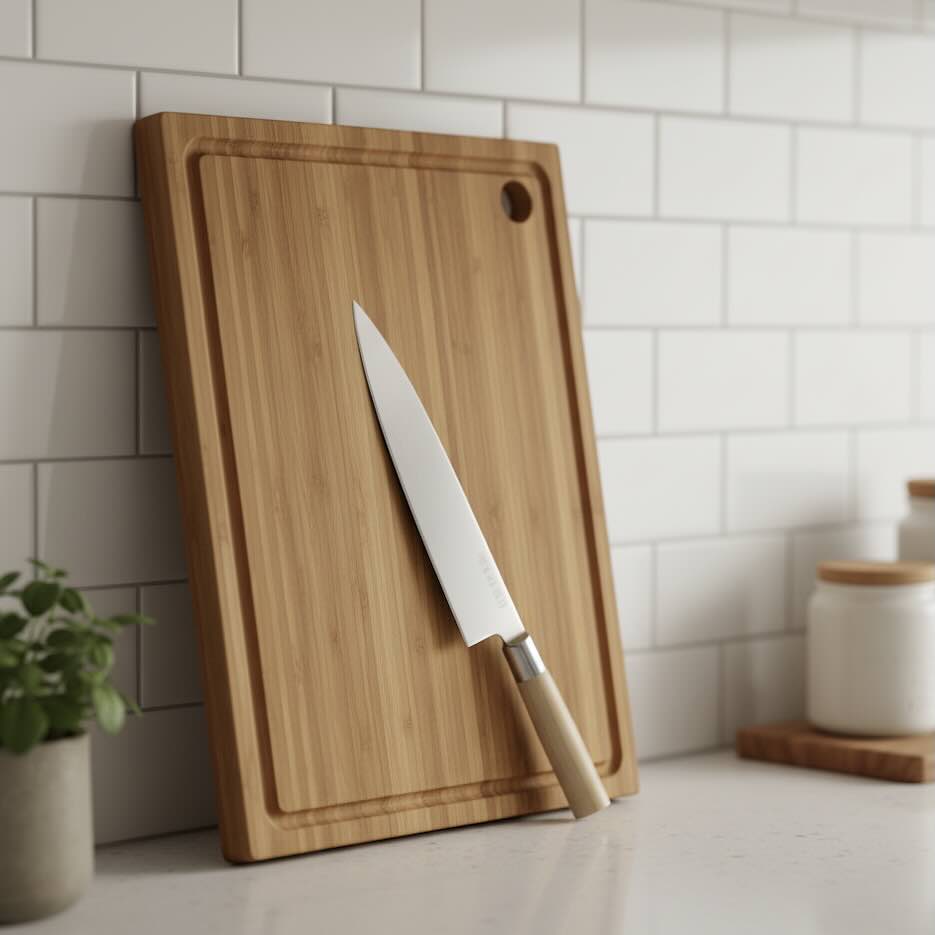
Your cutting board is where nearly every meal begins—chopping vegetables, slicing proteins, preparing fruits, and handling ingredients that go directly into your family's bodies. Plastic cutting boards develop deep grooves that harbor bacteria and can shed microplastics into your food. Traditional wood boards often come from slow-growing trees treated with unknown finishes, and some harbor bacteria in their porous grain. Glass boards dull knives quickly and create jarring noise.
If you're seeking a healthier, more sustainable option for your kitchen, bamboo cutting boards offer a compelling alternative that balances performance, safety, and environmental responsibility. These eco-friendly surfaces provide a knife-friendly cutting experience without the concerns associated with plastic or questionable wood treatments.
Bamboo cutting boards have surged in popularity among health-conscious home cooks for solid reasons. Bamboo grows incredibly fast without pesticides, making it one of the most sustainable materials available. The natural hardness protects your knife edges while resisting the deep scarring that makes plastic boards unsanitary. Bamboo's inherent antimicrobial properties help resist bacterial growth between cleanings. However, bamboo boards aren't perfect—they require specific care to prevent cracking, and quality varies dramatically between manufacturers. This comprehensive guide explores the pros and cons of bamboo cutting boards honestly, covering the science behind bamboo's properties, real user experiences, safety considerations, proper care techniques, and how these boards compare to alternatives. You'll learn exactly what to expect from bamboo cutting boards and whether they're the right choice for your kitchen.
The science behind bamboo cutting boards starts with understanding bamboo itself. Though it resembles wood, bamboo is technically a grass—the fastest-growing plant on Earth. Some species grow three feet daily, reaching maturity in just 3-5 years versus 20-50 years for hardwoods. This rapid growth occurs without replanting since bamboo's root system produces new shoots continuously. The mechanism of this sustainability makes bamboo boards an eco-friendly choice.
Bamboo's cellular structure differs significantly from hardwoods. The plant evolved with vertical fibers running its length, creating natural strength and density. This structure makes bamboo cutting boards harder than maple—registering 1,380 on the Janka hardness scale compared to maple's 1,450. The promise is a cutting surface that's gentle on knives while resisting knife marks better than softer woods.
One of bamboo's most discussed features is its inherent antimicrobial nature. Bamboo contains "bamboo kun," a natural agent that protects the living plant from bacteria and pests. Research shows this property partially transfers to finished bamboo products. The science reveals that bamboo cutting boards naturally resist bacterial colonization better than some alternatives.
However, the mechanism isn't foolproof. While bamboo kun provides some bacterial resistance, it doesn't make bamboo boards self-sanitizing. Proper cleaning remains absolutely essential. The promise is that bamboo provides an extra layer of protection beyond just washing—bacteria don't proliferate as rapidly on bamboo surfaces as on plastic boards with deep grooves.
Understanding moisture management reveals why bamboo cutting boards behave differently than traditional wood. Bamboo has lower moisture absorption than most hardwoods due to its dense cellular structure. This mechanism reduces swelling, warping, and cracking that plague wooden cutting boards. Your bamboo board maintains dimensional stability better through repeated washing and drying cycles.
The silica content in bamboo—up to 70% in some species—contributes to moisture resistance and hardness. This natural mineral creates a barrier that helps repel water. The promise of bamboo cutting boards includes better resistance to the warping and splitting that eventually destroys conventional wooden boards. However, this doesn't make them waterproof—proper care still matters tremendously.
The science of bamboo board construction significantly affects performance. Most bamboo cutting boards use laminated construction—thin bamboo strips glued together under pressure. This mechanism creates stable boards less prone to warping than solid pieces. The grain orientation (horizontal, vertical, or end-grain) affects appearance, hardness, and knife-friendliness.
Horizontal grain boards show bamboo's natural nodes and are typically less expensive. Vertical grain appears as thin stripes and offers greater hardness. End-grain bamboo cutting boards, like butcher blocks, are most knife-friendly but also most expensive. Understanding these construction differences helps you choose bamboo boards that match your priorities for appearance, performance, and budget.

When you first use bamboo cutting boards, several characteristics become immediately apparent. The surface feels smooth and slightly warm compared to glass or plastic. The board is lighter than comparably-sized hardwood but heavier than plastic, creating a substantial feel without excessive weight. The natural color variations create visual interest that makes your kitchen feel warmer and more organic.
Reviews across Amazon consistently mention this pleasant aesthetic and tactile experience. Users describe bamboo boards as "beautiful on the counter," "substantial but not too heavy," and "naturally gorgeous without looking like cheap plastic." The immediate results include cutting surfaces that enhance your kitchen's appearance while performing their essential function.
The critical performance metric for cutting boards is how they protect knife edges while providing stable cutting surfaces. Bamboo cutting boards excel at this balance. The natural hardness is sufficient to resist deep scoring while remaining soft enough not to dull knives excessively. Users report that knives glide smoothly across bamboo surfaces without the jarring impact of glass or stone.
Reddit's cooking communities share detailed performance experiences. Home cooks note that bamboo boards handle daily vegetable prep, meat slicing, and fruit cutting without developing the deep grooves that make plastic boards unsanitary. The surface accumulates light knife marks over time but typically doesn't develop dangerous bacterial harboring crevices. Bamboo cutting boards maintain usable surfaces longer than plastic alternatives in most users' experiences.
The care requirements for bamboo cutting boards significantly affect long-term satisfaction. Hand-washing is strongly recommended—while some users successfully dishwash bamboo, repeated high-heat exposure accelerates drying and cracking. The immediate results of proper care include boards that maintain their integrity and appearance for years. Periodic oiling with food-grade mineral oil prevents excessive drying.
Users who follow care instructions report excellent longevity. Those who neglect maintenance—especially failing to oil boards—often experience cracking and warping within 6-12 months. This maintenance sensitivity represents bamboo's primary weakness compared to plastic boards that tolerate neglect better.
Extended use reveals the true quality of bamboo cutting boards. Reviews from long-term users provide valuable insights into longevity expectations. Quality bamboo boards typically last 2-4 years with proper care before needing replacement. Some users report boards lasting longer, while others experience cracking sooner due to maintenance failures or quality issues.
Key performance observations from user reviews:
The hands-on experience demonstrates that bamboo cutting boards deliver solid performance when properly maintained but require more attention than plastic alternatives to achieve their expected lifespan.

The safety of bamboo cutting boards depends heavily on manufacturing processes. Since most bamboo boards use laminated construction, the adhesive bonding bamboo strips becomes critical. Traditional adhesives contain formaldehyde—a known carcinogen and respiratory irritant. Cheap bamboo boards may use formaldehyde-based glues that can off-gas into your kitchen and potentially contaminate food.
Non-toxic bamboo cutting boards use food-safe adhesives without formaldehyde. Look for boards explicitly stating they use FDA-approved, formaldehyde-free glue. Some premium boards use soy-based or other natural adhesives. Understanding these adhesive differences helps you identify genuinely safe bamboo boards versus those that compromise health despite bamboo's natural benefits.
One major safety advantage of bamboo cutting boards is that bamboo rarely requires pesticides. The plant's rapid growth and natural resistance to pests mean commercial bamboo typically grows without chemical treatments. This contrasts with conventional agriculture where cutting board woods might come from trees in pesticide-treated forests. The mechanism of bamboo's natural pest resistance involves bamboo kun and high silica content.
Clean bamboo boards made from organically grown or wild-harvested bamboo offer the highest purity. While "organic bamboo" certification isn't universal, reputable manufacturers disclose sourcing. Non-toxic bamboo cutting boards from transparent companies provide confidence that no agricultural chemicals contaminate surfaces touching your food daily.
The food safety of bamboo cutting boards generates considerable discussion. Bamboo's natural antimicrobial properties provide some bacterial resistance, but proper cleaning remains essential. The mechanism involves bamboo kun's molecular structure disrupting bacterial cell membranes. Research shows bamboo harbors fewer bacteria than plastic boards with comparable knife scarring.
However, no cutting board surface is self-sanitizing. You must thoroughly wash bamboo boards after each use, especially after contact with raw meat or poultry. The safety advantage is that bamboo's hardness resists the deep grooves where bacteria proliferate in plastic boards. Non-toxic bamboo cutting boards, when properly cleaned, provide sanitary food preparation surfaces.
Understanding surface treatments affects bamboo cutting board safety. Some manufacturers apply finishes to enhance appearance or water resistance. Problematic finishes include polyurethane coatings, varnishes, or oils containing drying agents. These treatments can leach chemicals into food or degrade over time, compromising safety.
Safe bamboo cutting boards use only food-grade treatments:
Non-toxic bamboo cutting boards should clearly disclose any finishes or treatments used. Avoid boards with vague labeling about "protective coatings" without specific ingredients. Clean bamboo boards let you maintain them with simple food-grade mineral oil, ensuring complete safety.
Your cutting board touches nearly every ingredient your family eats, making its safety crucial. Children's developing bodies are particularly vulnerable to chemical exposures. Choosing bamboo cutting boards eliminates concerns about BPA, phthalates, and microplastics from plastic boards. The natural material provides peace of mind that your food prep surface isn't introducing toxins.
Kids' safety improves with properly maintained bamboo boards. The natural antimicrobial properties offer additional protection beyond cleaning. When teaching children cooking skills, non-toxic surfaces become even more important—kids may not wash boards as thoroughly as adults. Family use of bamboo cutting boards creates cleaner food preparation environments for everyone in your household.
Food safety best practices recommend using separate cutting boards for different food types. This prevents cross-contamination between raw meats and ready-to-eat foods. Bamboo cutting boards work excellently in this system. Their relatively low cost compared to premium hardwoods makes maintaining 3-4 boards financially feasible.
Many families implement color-coding or size-based systems with bamboo boards. A large board for vegetables, medium for fruits, and small for raw meats keeps preparation safe. The lightweight nature of bamboo boards makes grabbing the appropriate board from storage easy. Family use benefits from this practical approach to kitchen safety.
Bamboo cutting boards serve beautifully for teaching children proper food preparation techniques. The stable, non-slip surface provides safe working areas for young cooks learning knife skills. The natural warmth of bamboo feels friendlier than industrial plastic or glass. The moderate hardness is forgiving if knives slip.
Parents report feeling more comfortable allowing children to help cook when using bamboo cutting boards. The non-toxic composition means spills or mistakes don't spread concerning chemicals. Kids' safety extends to emotional comfort—bamboo's natural aesthetic creates inviting cooking environments that encourage children's kitchen involvement.
Bamboo cutting boards accommodate diverse family members' needs effectively. The lightweight nature helps elderly relatives with limited strength. Arthritis sufferers appreciate boards that don't require excessive force when cutting. The visual contrast of light bamboo makes seeing ingredients easier for those with vision challenges.
Household usability considerations for different users:
Family use of bamboo cutting boards works across generations and ability levels. The universal appeal makes bamboo smart choices for multi-generational households where various family members participate in cooking.
Bamboo cutting boards span considerable price ranges reflecting quality differences. Budget options cost $8-15 for single boards of adequate size. Mid-range boards run $20-40 for better construction and materials. Premium bamboo cutting boards reach $50-80+ for thick, end-grain construction or extra-large sizes.
Where to buy affects value significantly. Amazon offers extensive selection with user reviews validating quality. HomeGoods and TJ Maxx sometimes stock quality bamboo boards at discounted prices. Specialty kitchen stores carry premium options with higher markups. Restaurant supply stores occasionally offer commercial-quality bamboo boards at competitive rates.
Evaluating bamboo's value requires comparing to alternatives. Cheap plastic cutting boards cost $5-10 but need frequent replacement as they develop dangerous grooves. Quality plastic boards run $15-25 and last longer but still harbor bacteria. Hardwood boards from maple or walnut cost $40-100+ for quality pieces but last much longer than bamboo.
Bamboo sits in the middle cost-wise while offering unique benefits. The price is higher than plastic but significantly lower than quality hardwood. When you factor in bamboo's sustainability and decent lifespan with proper care, the cost-per-use becomes reasonable. A $25 bamboo board lasting 3 years works out to about $8 annually—modest for daily-use kitchen tools.
The true value of bamboo cutting boards includes replacement frequency and maintenance costs. With proper care—hand-washing and monthly oiling—quality bamboo boards last 2-4 years for heavy users. Light users may extend this to 5+ years. The care cost is minimal: a bottle of food-grade mineral oil runs $5-10 and lasts years.
Replacement cycles for bamboo fall between plastic (replaced often) and premium hardwood (lasts decades). This moderate lifespan suits many households' needs and budgets. You're not investing in "forever" boards like quality butcher blocks, but you're getting far better longevity than plastic alternatives.
Strategic approaches help optimize your investment in bamboo cutting boards:
The price of bamboo cutting boards represents solid value for environmentally conscious households. The combination of sustainability, decent performance, and moderate cost creates a sweet spot between cheap plastic and expensive hardwood alternatives. Where to buy matters less than choosing well-reviewed brands with solid construction.
The most significant comparison for health-conscious cooks is bamboo cutting boards versus plastic alternatives. Plastic boards dominate many kitchens due to low cost and dishwasher safety. However, plastic develops deep knife grooves that harbor dangerous bacteria. Studies show bacteria persist in plastic board grooves even after thorough washing. Plastic also sheds microplastics into food—a growing health concern.
Bamboo cutting boards vastly outperform plastic in safety and sustainability. The harder surface resists deep scoring. The natural antimicrobial properties inhibit bacterial growth. The renewable source and biodegradability eliminate plastic's environmental impact. For families prioritizing health, bamboo boards clearly win this comparison despite requiring more maintenance than plastic.
Comparing bamboo cutting boards to traditional hardwood alternatives reveals interesting trade-offs. Quality hardwood boards from maple, walnut, or cherry offer beautiful aesthetics and exceptional longevity—often 10-20 years with proper care. However, hardwoods grow slowly, making them less sustainable. Premium hardwood boards cost $50-150, representing significant investments.
Bamboo boards match hardwood's basic performance at a fraction of the cost. The rapid renewability makes bamboo objectively more sustainable. Maintenance requirements are comparable—both need hand-washing and regular oiling. The alternatives comparison shows bamboo as the greener, more affordable choice with somewhat shorter lifespan. Hardwood wins on aesthetics and longevity; bamboo wins on sustainability and value.
End-grain cutting boards represent the premium category—thick blocks where wood fibers stand vertically. This construction is most knife-friendly, as blade edges slip between fibers rather than cutting across them. End-grain bamboo cutting boards exist but are less common than edge-grain bamboo. End-grain boards from any material cost significantly more due to complex construction.
For serious home cooks, end-grain butcher blocks (whether bamboo or hardwood) offer superior performance. The self-healing nature prolongs usable life. However, the price—$80-200+—exceeds most people's cutting board budgets. Standard edge-grain bamboo boards provide excellent value for typical home cooking needs without the premium price.
Among bamboo cutting boards, several brands distinguish themselves through quality and customer satisfaction. Totally Bamboo specializes exclusively in bamboo products with extensive cutting board selections. Their boards feature quality construction and reasonable pricing ($20-40 for most sizes). Reviews consistently praise their durability and appearance.
Royal Craft Wood offers bamboo boards with extra-thick construction and integrated features like juice grooves. Their products run $25-50 and receive high marks for quality. Greener Chef provides organic bamboo options with strict chemical-free standards. The best bamboo cutting boards for your kitchen depend on priorities:
Quality bamboo cutting boards from reputable sources will dramatically outperform cheap plastic while costing far less than premium hardwood alternatives.

Bamboo cutting boards offer compelling benefits that make them excellent choices for eco-conscious home cooks. The sustainability from rapidly renewable bamboo addresses environmental concerns without sacrificing performance. The natural antimicrobial properties provide additional food safety beyond proper cleaning. The hardness protects knife edges while resisting the deep scarring that makes plastic boards dangerous.
The practical advantages extend throughout daily use. Bamboo boards are lighter than hardwood, making them easier to handle and store. The natural beauty creates aesthetically pleasing kitchens that feel warmer than plastic alternatives. The moderate cost delivers solid value—better than plastic, more affordable than premium hardwood. The non-toxic nature eliminates concerns about BPA, phthalates, and microplastics. For families prioritizing health and sustainability, bamboo boards check most important boxes.
Bamboo cutting boards aren't perfect for everyone. The maintenance requirements—hand-washing and regular oiling—exceed plastic's low-maintenance convenience. Neglecting this care leads to cracking and warping, often within a year. The expected lifespan of 2-4 years means periodic replacement, unlike hardwood boards that last decades. Quality varies dramatically between manufacturers, making research essential.
Other cons include the adhesive concerns in laminated construction. Cheap boards may use formaldehyde-containing glues that compromise health benefits. The hardness, while generally appropriate, can be tough on knife edges compared to softer woods. Some boards develop visible darkening around cut marks over time. These limitations are manageable but require honest acknowledgment when considering bamboo cutting boards.
For households seeking sustainable, reasonably priced cutting boards that outperform plastic, bamboo represents an excellent choice with realistic expectations. We recommend purchasing quality bamboo boards from reputable manufacturers who disclose adhesive types and bamboo sourcing. Start with one or two boards to ensure you're willing to maintain them properly before building a full collection.
Commit to hand-washing bamboo boards immediately after use—never let them soak. Establish a monthly oiling routine using food-grade mineral oil. These simple practices dramatically extend board life and prevent the cracking that leads to negative reviews. Accept that bamboo boards are semi-permanent rather than lifetime investments. Plan on 3-year replacement cycles rather than expecting decade-long service.
Consider your priorities when deciding whether bamboo boards suit your kitchen. If you value sustainability highly, want better performance than plastic, but can't afford premium hardwood, bamboo hits the sweet spot. If you need absolute lowest maintenance, stick with plastic despite its drawbacks. If you want lifetime boards and can invest significantly, choose premium hardwood instead.
For most health-conscious home cooks, bamboo cutting boards offer the best balance of performance, safety, sustainability, and value. They're not perfect, but their advantages outweigh limitations when you understand and accept the care requirements. Your kitchen benefits from natural, renewable cutting surfaces that protect your family from plastic chemicals while supporting more sustainable manufacturing practices.
Choose quality bamboo cutting boards with confidence, maintain them properly with simple care routines, and enjoy knowing you've made a decision that benefits both your family's health and the planet's wellbeing. These boards serve you well for years while aligning with values of reducing toxins and supporting sustainability—a practical choice that honors both your cooking needs and your commitment to healthier living.
* AI Disclosure: This article was developed with the assistance of AI language models, which aided in research, drafting, and/or editing. We strive for accuracy, but AI-generated content can occasionally contain errors. We recommend you double-check and verify information before making decisions based on this content.