Discover how bamboo kitchen accessories can replace plastic tools with sustainable, naturally antimicrobial alternatives that are safer for your family.
Tchiki Davis, M.A., Ph.D.
*This post may contain affiliate links. If you click and make a purchase, we may earn a small commission at no extra cost to you.
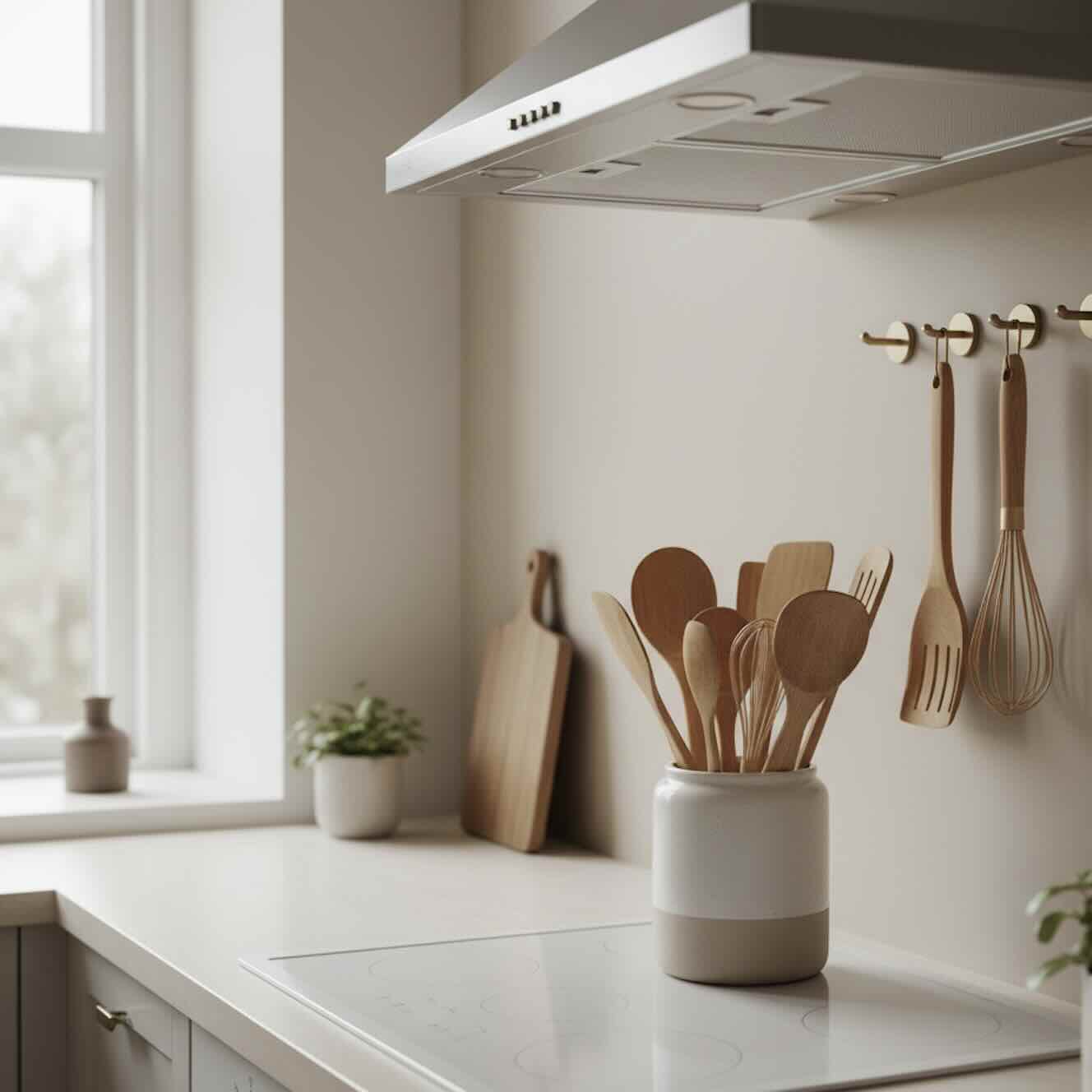
Your kitchen is filled with plastic—spatulas, cutting boards, utensil holders, dish racks, and storage containers. These petroleum-based items shed microplastics into your food, leach chemicals when heated, and eventually end up in landfills where they persist for centuries. Every time you stir a hot pan with a plastic spatula or cut vegetables on a plastic board, tiny particles break off and enter your meals. These microplastics accumulate in your body over time, with unknown long-term health consequences.
Bamboo kitchen accessories offer a natural alternative that's better for your health and the environment. This fast-growing grass (yes, bamboo is technically a grass, not a wood) reaches maturity in just 3-5 years compared to decades for hardwood trees. Bamboo naturally resists bacteria and moisture without chemical treatments, making it ideal for kitchen tools that contact food. From cutting boards and utensils to dish racks and storage containers, bamboo products replace plastic while offering durability and natural beauty. The material is harder than many hardwoods yet lightweight and easy to use. Whether you're motivated by reducing plastic exposure, supporting sustainable forestry, or simply wanting beautiful kitchen tools, bamboo accessories provide practical solutions. Let's explore why these sustainable kitchen items deserve a place in your home and how they perform in real-world daily use.
Bamboo kitchen accessories work effectively because of the plant's unique natural properties. Bamboo contains a bio-agent called "bamboo kun" that gives it inherent antimicrobial characteristics. This natural resistance to bacteria growth makes bamboo particularly suitable for items that contact food and moisture. Unlike plastic that develops deep scratches harboring bacteria, bamboo's structure helps inhibit microbial colonization.
The science behind bamboo as a kitchen material centers on its density and hardness. Despite being a grass, bamboo rivals or exceeds many hardwoods in strength and durability. The Janka hardness scale rates bamboo at 1,380-1,600, comparable to hard maple and significantly harder than most softwoods. This density creates durable kitchen tools that withstand daily use without quickly wearing down or breaking.
The sustainability mechanism of bamboo kitchen accessories begins with the plant's remarkable growth rate. Bamboo reaches full height in a single growing season—some species grow three feet per day during peak periods. The plant regenerates from its root system after harvesting, eliminating the need for replanting. This rapid renewal makes bamboo one of the most sustainable materials available for consumer products.
Bamboo also produces 35% more oxygen than equivalent tree stands while absorbing more carbon dioxide. The extensive root systems prevent soil erosion and require no fertilizers or pesticides for healthy growth. These environmental benefits extend beyond the kitchen tools themselves to the agricultural practices that produce the raw material.
The bamboo kun present in bamboo fibers actively inhibits bacteria and fungi growth. Research shows that bacteria placed on bamboo surfaces die within hours, while they thrive in plastic scratches. This natural protection means your bamboo kitchen accessories stay more hygienic with normal cleaning. You're not relying on chemical treatments to keep kitchen tools safe.
The moisture resistance of bamboo prevents warping and cracking better than many wood alternatives. The dense fiber structure doesn't absorb water as readily as softer woods. This durability extends the life of bamboo cutting boards, utensils, and other kitchen items that regularly encounter wet conditions.
Quality bamboo kitchen accessories use food-safe mineral oil or natural wax finishes rather than synthetic varnishes or stains. This minimal processing preserves bamboo's natural properties while creating water-resistant surfaces. The best products specify their finishing materials, allowing you to verify that nothing toxic will leach into your food.
Some bamboo items use adhesives to bind bamboo strips together. Quality manufacturers specify using formaldehyde-free, food-safe glues. This transparency matters for ensuring your sustainable kitchen tools don't introduce new chemical concerns while solving plastic problems.
Amazon reviews consistently praise bamboo kitchen accessories for their durability and attractive appearance. Users describe bamboo cutting boards lasting for years with proper care, maintaining smooth surfaces even with regular use. The natural aesthetic brings warmth to kitchens while providing functional benefits. Reviewers appreciate that bamboo utensils don't scratch non-stick cookware or damage pots and pans like metal tools can.
One Amazon reviewer shared that their bamboo utensil set has lasted over three years with daily use, still looking nearly new after regular washing and occasional oiling. Another user on Reddit mentioned switching their entire kitchen to bamboo tools and loving how they feel more substantial and quality than their old plastic items. The weight and balance of bamboo utensils receive frequent praise.
Bamboo cutting boards receive excellent reviews for their knife-friendly surfaces. Users report that their knives stay sharper longer compared to plastic or glass boards. The hardness provides a stable cutting surface without being so hard that it damages blade edges. The natural moisture resistance means boards don't warp or crack when properly maintained with monthly oiling.
Many reviewers mention that bamboo boards show fewer visible knife marks than plastic alternatives. The self-healing properties of the dense fibers help surfaces stay smoother over time. This maintains both functionality and appearance through years of use. Some users note that very heavy chopping can create marks, but these are less prone to harboring bacteria than plastic grooves.
Bamboo spatulas, spoons, and turners stand up remarkably well to daily cooking. Users report that the utensils don't melt, warp, or degrade from heat exposure like plastic tools. The natural material feels comfortable in hand with a weight and balance that makes cooking more enjoyable. The smooth finish doesn't splinter or develop rough spots even after years of use.
Storage solutions like bamboo drawer organizers and countertop utensil holders receive praise for their sturdiness. These sustainable kitchen items maintain their shape and finish through constant use. The natural aesthetic improves with age as bamboo develops a warm patina, unlike plastic that yellows and becomes dingy.
The care required for bamboo kitchen accessories is straightforward—hand wash and dry thoroughly, with monthly oiling for boards and utensils. Users who follow these simple steps report products lasting 5-10+ years. Those who skip maintenance see boards dry out and potentially crack within 1-2 years. The investment in occasional oiling clearly pays off in extended product life.

The safety promise of bamboo kitchen accessories centers on being free from the chemicals found in plastic kitchen tools. Bamboo contains no BPA, phthalates, or other synthetic compounds that leach from plastic when heated or scratched. The natural material doesn't shed microplastics into your food during use. This elimination of plastic-related chemical exposures represents the primary health benefit of choosing bamboo.
Quality bamboo products use food-safe finishes—typically mineral oil or natural waxes—rather than synthetic varnishes or stains. These natural treatments protect the bamboo while remaining completely safe for food contact. The best manufacturers clearly state their finishing materials, allowing you to verify safety claims. Transparency about processing and finishing indicates companies that prioritize consumer health.
Some bamboo kitchen accessories, particularly cutting boards and larger items, use adhesives to bind bamboo strips together. The safety of these products depends entirely on the glue type. Formaldehyde-based adhesives were common historically and posed health concerns. Modern quality bamboo products use formaldehyde-free, food-safe adhesives that don't off-gas or leach into food.
Look for products specifying "formaldehyde-free" or "food-safe adhesive" in their descriptions. Certifications from organizations like NSF or FDA approval for food contact surfaces provide additional assurance. Single-piece bamboo items avoid adhesive concerns entirely, though they're typically limited to smaller utensils and tools.
Raw, untreated bamboo kitchen accessories offer the purest option with no added chemicals. However, some treatment is often necessary for durability and water resistance. Food-grade mineral oil provides natural protection without introducing toxins. Beeswax offers another safe option for sealing and protecting bamboo surfaces.
Avoid bamboo products with unknown finishes or those that feel plasticky or have strong chemical odors. These likely contain synthetic sealants or varnishes that can leach into food. The natural wood smell and feel of quality bamboo indicates proper, safe finishing.
When evaluating safety, bamboo kitchen accessories are significantly less toxic than plastic alternatives. Plastic tools contain numerous synthetic compounds that migrate into food, especially when heated. Even "BPA-free" plastics often use alternative bisphenols that may pose similar concerns. Metal tools are generally safe but can react with acidic foods and scratch cookware.
Wood alternatives like maple or walnut offer comparable safety to bamboo. The main advantage bamboo holds is its natural antimicrobial properties and faster sustainability. All natural materials require proper care to prevent bacterial harboring, but they start from a safer baseline than plastic.
Parents often choose bamboo kitchen accessories specifically to reduce their family's plastic exposure. Every meal prepared touches kitchen tools, making the material choice significant for cumulative chemical exposure. Bamboo eliminates the microplastics and chemical leaching concerns associated with plastic spatulas, cutting boards, and storage containers. This simple switch protects children during their critical developmental years.
The natural antimicrobial properties of bamboo kitchen items provide additional safety for families. Bacteria growth is inhibited on bamboo surfaces, reducing foodborne illness risks. This matters particularly when preparing food for young children with developing immune systems. The peace of mind that comes from using naturally bacteria-resistant tools is valuable for busy parents.
Bamboo utensils work wonderfully for teaching children cooking skills. The lightweight material is easier for small hands to control than heavy metal tools. The natural texture provides good grip even for inexperienced young cooks. Bamboo doesn't conduct heat like metal, so handles stay cooler and safer during cooking activities with children.
Some families use bamboo plates, bowls, and utensils specifically for children. These are lighter and less breakable than ceramic while being safer than plastic. The natural material introduces children to sustainable choices from an early age, building awareness about environmental responsibility through everyday items.
Pregnant and nursing mothers should prioritize reducing chemical exposures, making bamboo kitchen accessories particularly appropriate. The elimination of BPA and phthalates from food preparation tools removes one source of hormone-disrupting chemicals. During pregnancy, when fetal development is most vulnerable to chemical interference, using the safest possible kitchen tools makes sense.
The natural properties of bamboo mean no off-gassing of synthetic chemicals in your kitchen. Pregnant women often develop heightened chemical sensitivities and nausea triggers. The lack of plastic odors and chemical residues makes bamboo tools more tolerable during this sensitive period.
Bamboo kitchen accessories work well for people with chemical sensitivities who react to plastic odors and residues. The natural material doesn't trigger the headaches, respiratory issues, or skin reactions that synthetic materials cause in sensitive individuals. The absence of formaldehyde in quality bamboo products eliminates another common sensitivity trigger.
Those with latex allergies can safely use bamboo tools, as the material contains no latex or related compounds. This makes bamboo an inclusive choice for households with varied allergy profiles and sensitivities.
Bamboo kitchen accessories range widely in price depending on item type and quality. Individual utensils cost $3-12 each, cutting boards run $15-50, and complete utensil sets range from $20-60. These prices are comparable to or slightly higher than plastic alternatives but significantly less than premium hardwood options. The mid-range positioning makes sustainable kitchen tools accessible to most budgets.
The cost-per-use calculation favors bamboo due to longevity. A $30 bamboo cutting board lasting 7-10 years costs roughly $3-4 annually. A $10 plastic board needing replacement every 1-2 years costs $5-10 annually while exposing you to chemicals and creating waste. The slightly higher upfront investment in bamboo pays off through durability and health protection.
You can find bamboo kitchen accessories at many retailers including Target, Bed Bath & Beyond, kitchen specialty stores, and extensively online through Amazon. Natural lifestyle stores often carry curated selections of high-quality bamboo products. Online shopping provides the widest selection with customer reviews to guide purchasing decisions.
Amazon offers numerous brands at various price points with Prime shipping convenience. Direct-to-consumer sustainable brands like Bambu and To-Go Ware sell through their websites, often with more detailed product information and company ethos. Supporting these smaller companies encourages continued innovation in sustainable kitchen products.
Budget bamboo kitchen accessories ($10-20 for utensil sets) work adequately but may use lower-grade bamboo or questionable adhesives and finishes. These serve as introduction points for trying bamboo without major investment. However, they may not last as long or perform as well as mid-range options.
Mid-range products ($20-40 for utensil sets, $25-40 for quality cutting boards) offer the best value for most users. Brands like Totally Bamboo and Core Bamboo provide reliable quality at reasonable prices. These products use food-safe adhesives, proper finishes, and dense bamboo that performs well over years of use.
Premium bamboo items ($50+ for cutting boards, $40-60 for comprehensive tool sets) often feature thicker construction, premium finishes, and attractive design elements. Brands like Zwilling and premium lines from established companies offer these higher-end options. The added cost brings enhanced durability and aesthetics but isn't necessary for function.
The true value of bamboo kitchen accessories extends beyond purchase price. You're eliminating daily microplastic exposure from cooking and food preparation. You're reducing landfill waste—a bamboo spatula at end-of-life can be composted, while plastic persists for centuries. The aesthetic improvement bamboo brings to your kitchen creates daily enjoyment worth considering in value calculations.
The minimal maintenance cost (food-grade mineral oil runs $5-10 and lasts months) preserves your investment. This small ongoing expense keeps bamboo items functioning optimally for years. The combination of durability, safety, and sustainability makes bamboo an intelligent long-term value proposition.
When comparing bamboo kitchen accessories to plastic alternatives, the health and environmental advantages are overwhelming. Plastic utensils, cutting boards, and tools shed microplastics into food, leach chemicals when heated, and create persistent waste. Bamboo offers comparable or superior functionality while eliminating these concerning factors. The natural material provides a safer, more sustainable option for food preparation tools.
Comparing bamboo to hardwood alternatives reveals more subtle trade-offs. Both materials are natural, durable, and safe for food contact. Hardwoods like maple and walnut offer beautiful grain patterns and time-tested performance. Bamboo counters with faster sustainability, natural antimicrobial properties, and often lower cost. Both represent excellent choices compared to plastic.
The contrast between bamboo and plastic kitchen accessories couldn't be starker. Plastic tools degrade under heat, scratching and use, releasing microplastics and chemicals. Bamboo remains stable and safe through years of daily cooking. Plastic cutting boards develop deep grooves that harbor bacteria; bamboo's natural antimicrobial properties help prevent colonization even with scratches.
Environmental impact decisively favors bamboo. Plastic production uses petroleum and creates pollution. The products persist in landfills for centuries. Bamboo grows rapidly with minimal environmental impact and biodegrades at end-of-life. For health-conscious and environmentally aware consumers, bamboo is the clear winner over plastic.
Hardwood kitchen accessories like maple cutting boards and walnut utensils offer beautiful, durable alternatives to both plastic and bamboo. These traditional materials have proven track records spanning generations. Maple cutting boards are prized in professional kitchens for their durability and knife-friendly surfaces. Walnut provides rich color and elegant grain patterns.
Bamboo kitchen accessories offer several advantages over hardwood. The faster growth rate (3-5 years vs. 30-100 years) makes bamboo more sustainable. The natural antimicrobial properties provide additional hygiene benefits. Bamboo typically costs less than premium hardwoods while offering comparable durability. However, hardwoods win on aesthetic appeal for those who prioritize grain beauty and traditional materials.
Silicone kitchen utensils represent another alternative to plastic, offering heat resistance and flexibility. Quality food-grade silicone is generally safe, though cheaper products may contain fillers or additives. Silicone works well for spatulas and scrapers but doesn't translate to cutting boards or structural items like bamboo does.
Bamboo provides a more comprehensive replacement for plastic across all kitchen tool categories. The natural, plant-based origin appeals to people seeking to minimize synthetic materials in their homes. Both bamboo and quality silicone represent safe alternatives to conventional plastic, with personal preference determining the better choice.

Bamboo kitchen accessories deliver practical sustainability that improves your health while reducing environmental impact. These natural tools eliminate plastic-related chemical exposures from daily food preparation. The inherent antimicrobial properties provide additional safety benefits. For households seeking to reduce plastic use and toxic exposures, bamboo items offer accessible, functional solutions that work beautifully in real-world kitchens.
The main advantages are safety, sustainability, and durability. Bamboo eliminates BPA, phthalates, and microplastics from cooking tools. The rapidly renewable material grows back after harvesting without replanting. Quality bamboo products last 5-10+ years with simple care, making them excellent long-term investments. The natural aesthetic improves kitchen appearance while supporting your values.
Bamboo kitchen accessories provide chemical-free food preparation tools that don't leach toxins or shed microplastics. The natural antimicrobial properties help maintain hygiene even with daily use. The material is harder and more durable than many alternatives while remaining knife-friendly. Bamboo feels substantial and quality in hand, making cooking more enjoyable.
The environmental benefits are significant—bamboo grows rapidly with minimal inputs and biodegrades at end-of-life. Supporting bamboo products encourages sustainable forestry and reduces petroleum demand for plastic production. The attractive appearance of bamboo brings warmth and natural beauty to kitchens.
Bamboo kitchen accessories require more maintenance than plastic—hand washing and monthly oiling are necessary for longevity. Dishwasher use damages bamboo, which inconveniences some users. The material can develop minor scratches and wear marks over time, though these are less concerning than plastic degradation.
Quality varies significantly between brands and price points. Cheaper bamboo products may use formaldehyde adhesives or poor finishes. Research and investment in reputable brands is necessary to ensure you're getting safe, durable products. Initial costs are higher than plastic alternatives, though long-term value is better.
For most households, transitioning to bamboo kitchen accessories represents a smart upgrade that aligns daily habits with health and sustainability values. Start with frequently used items—a cutting board, cooking utensils, and utensil holders. This establishes familiarity with bamboo while immediately reducing plastic use in high-exposure areas.
Choose established brands like Totally Bamboo, Core Bamboo, or Bambu that specify formaldehyde-free construction and food-safe finishes. Invest in mid-range quality rather than budget options—the slight additional cost brings significantly better durability and safety assurance.
Commit to simple maintenance: hand wash items, dry thoroughly, and oil monthly. This small effort extends product life to 7-10+ years. Your bamboo tools will become beloved kitchen staples that you appreciate daily.
Bamboo kitchen accessories prove that sustainable choices don't require sacrifice. These tools perform beautifully while protecting your family's health and supporting environmental stewardship. The simple change from plastic to bamboo creates meaningful impact through items you use every single day. Your kitchen deserves tools that are as safe and sustainable as the healthy meals you prepare in it.
* AI Disclosure: This article was developed with the assistance of AI language models, which aided in research, drafting, and/or editing. We strive for accuracy, but AI-generated content can occasionally contain errors. We recommend you double-check and verify information before making decisions based on this content.