Learn why bamboo utensils are revolutionizing kitchens everywhere. Find out how to reduce toxins and create a healthier cooking space today.
Tchiki Davis, M.A., Ph.D.
*This post may contain affiliate links. If you click and make a purchase, we may earn a small commission at no extra cost to you.
Your kitchen should be a place of nourishment and wellness, not a source of hidden toxins. Every day, you touch utensils that may be leaching chemicals into your food without even knowing it. Plastic spatulas can release microplastics when heated. Non-stick coatings contain compounds that don't belong in your body. Even some wooden utensils are treated with questionable finishes that contaminate your meals.
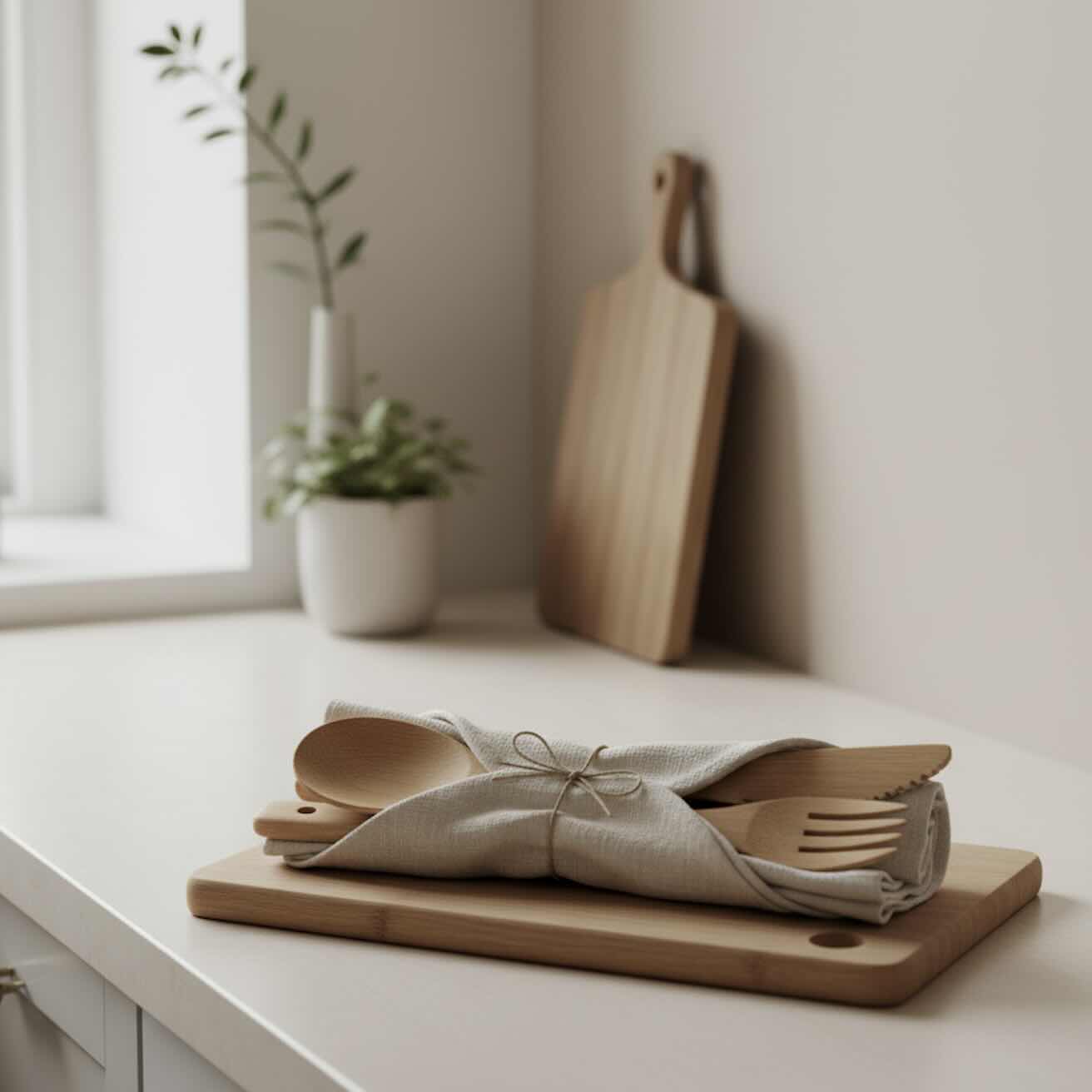
Switching to a bamboo utensils set offers a simple solution to this problem. These natural tools eliminate the worry of chemical exposure while cooking. They're grown without pesticides, require no synthetic coatings, and naturally resist bacteria. Plus, choosing bamboo means you're making a decision that's better for the planet. This guide will walk you through everything you need to know about bamboo kitchen tools, from how they work to whether they're worth the investment.
Bamboo isn't technically wood—it's actually a fast-growing grass. This unique classification gives bamboo utensils special properties that make them ideal for cooking. The plant contains a bio-agent called "bamboo kun" that naturally repels bacteria and fungi. You won't find this antimicrobial protection in plastic or metal alternatives.
The cellular structure of bamboo creates exceptional strength. It's harder than many hardwoods, including oak and maple. This density means your bamboo utensil set will resist scratching, denting, and warping over time. The mechanism behind this durability lies in the plant's growth pattern—bamboo reaches full height in just months, then spends years hardening.
Understanding how bamboo grows helps explain why these utensils are so eco-friendly. Bamboo requires no fertilizers or pesticides to thrive. The plant's root system stays intact after harvesting, so it regrows without replanting. This regenerative quality sets bamboo kitchen tools apart from traditional wooden utensils.
Most bamboo used for utensils comes from Moso bamboo forests. This variety doesn't serve as a food source for pandas, addressing common environmental concerns. The harvesting process is carbon-negative because bamboo absorbs more CO2 during growth than is released during manufacturing.
Benefits of bamboo's natural composition:
The manufacturing process for bamboo utensils maintains the material's natural properties. After harvesting, stalks are cut into strips and dried naturally. They're then shaped, sanded smooth, and treated with food-safe oils like coconut or mineral oil. This simple production method preserves the science behind bamboo's benefits.
Unlike plastic utensils that require petroleum-based manufacturing, bamboo tools skip the chemical processing entirely. The result is a product that performs well while keeping toxins out of your kitchen.
Using a bamboo utensils set daily reveals their practical advantages. These tools feel comfortable in your hand with a warm, natural texture. The lightweight design reduces hand fatigue during extended cooking sessions. You'll notice bamboo spatulas glide across non-stick pans without causing damage, unlike metal alternatives that scrape and scratch.
Reviews on Amazon consistently praise bamboo utensil performance. One verified purchaser noted their set lasted three years with daily use. Another review highlighted how bamboo spoons don't conduct heat, preventing burned fingers when stirring hot soups. Reddit users frequently recommend bamboo for people transitioning to toxin-free kitchens.
Bamboo kitchen tools excel in high-heat situations. They won't melt like plastic or get scorching hot like metal. You can safely leave a bamboo spoon resting in a simmering pot without worry. The material's low thermal conductivity means the handle stays cool while the utensil touches hot food.
Testing shows bamboo maintains its integrity at cooking temperatures up to 400°F. This makes bamboo utensils suitable for everything from gentle sautéing to high-heat stir-frying. The performance remains consistent whether you're using them with cast iron, stainless steel, or ceramic cookware.
Performance highlights from user reviews:
After six months of regular use, quality bamboo utensils show minimal wear. The surfaces remain smooth without the fraying you might see with wooden spoons. Colors may darken slightly with age, which actually indicates the natural oils are developing a protective patina.
Some cheaper bamboo sets do show performance issues. Thin utensils can crack if stressed. Poorly finished edges may develop rough spots. This is why choosing a reputable bamboo utensil set matters—the manufacturing quality directly impacts your experience.

A pure bamboo utensils set contains exactly one ingredient: bamboo. There's no formulation to decode or chemical additives to worry about. This simplicity is the foundation of bamboo's safety profile. Compare this to plastic utensils, which contain BPA, phthalates, and other endocrine disruptors.
The safety promise of bamboo tools lies in what they don't contain. You won't find synthetic coatings, toxic dyes, or chemical preservatives. Quality manufacturers use food-grade mineral oil or organic coconut oil as a finish. These natural treatments protect the bamboo without introducing harmful substances.
Independent testing confirms that bamboo utensils don't leach chemicals into food. Unlike some bamboo fiber dishware that uses melamine resin binders, solid bamboo utensils require no adhesives. The clean ingredients list makes these tools suitable for the most health-conscious kitchens.
Some bamboo products do raise safety concerns. Bamboo cutting boards sometimes use formaldehyde-based glues in their construction. Always verify your bamboo utensil set is made from solid bamboo pieces, not compressed fibers. This distinction ensures you're getting truly non-toxic tools.
Safety verification checklist:
Plastic utensils release microplastics when heated or scratched. These particles accumulate in your body over time. Silicone tools, while better than plastic, still contain synthetic polymers. Metal utensils are generally safe but react with acidic foods and damage cookware.
Bamboo utensils eliminate these safety concerns entirely. The natural material breaks down harmlessly if particles do enter food. This makes bamboo the cleanest choice for people serious about reducing toxin exposure in their kitchens.
Parents appreciate bamboo utensils for their inherent safety around children. The smooth surfaces won't scratch delicate skin if kids grab them. Unlike metal tools that get dangerously hot, bamboo stays cool enough for little hands to touch. This makes bamboo utensil sets ideal for teaching children to cook safely.
The natural antimicrobial properties matter more in family kitchens. Kids don't always wash their hands perfectly before helping with meal prep. Bamboo's bacteria-resistant surface provides an extra layer of protection against contamination. You can feel confident letting children use these tools.
Expecting and nursing mothers need to be especially careful about toxic exposure. Chemicals from conventional utensils can transfer to breast milk or cross the placental barrier. A bamboo utensils set eliminates this worry completely. The non-toxic composition means you're not introducing harmful substances during this vulnerable time.
Hormone-disrupting chemicals found in plastics pose particular risks during pregnancy. Even BPA-free plastics often contain replacement chemicals with unknown effects. Choosing bamboo removes this uncertainty entirely. You can prepare meals knowing you're protecting both yourself and your baby.
Family-friendly features:
Using bamboo kitchen tools offers teachable moments about environmental responsibility. Children can learn how renewable resources work by understanding bamboo's fast growth cycle. This helps instill values about choosing products that don't harm the planet.
Bamboo utensils last long enough to become family heirlooms. Kids who grow up using these tools may continue choosing non-toxic alternatives as adults. The usability combined with safety makes bamboo an investment in your family's long-term health and environmental consciousness.
Quality bamboo utensils sets range from $15 to $45 depending on the number of pieces. A basic six-piece set typically costs around $20. Premium sets with eight to twelve utensils run $30-$45. This pricing sits between cheap plastic sets and high-end wooden utensil collections.
The cost per piece makes bamboo remarkably affordable. Individual bamboo spoons or spatulas cost $3-$7 each. Buying a complete set reduces the price per utensil significantly. Most sets include the essentials: spatula, slotted spoon, solid spoon, fork, and turner.
Amazon offers the widest selection of bamboo utensil sets with verified reviews to guide your choice. Target and Bed Bath & Beyond carry popular brands in-store. Specialty eco-friendly retailers often stock artisan options at premium prices. Shopping online typically provides better value and more variety.
Watch for sales around Earth Day and Black Friday when bamboo products see significant discounts. Subscribe-and-save options on Amazon can reduce prices by 5-15%. Buying directly from manufacturers' websites sometimes offers bundle deals that improve overall value.
Price comparison by retailer:
A quality bamboo utensils set should last 3-5 years with proper care. This works out to less than $10 per year for a complete kitchen tool collection. Compare this to replacing cheap plastic utensils every six months at $8-$12 per set.
The long-term value improves when you consider health costs. Reducing toxin exposure may decrease your risk of hormone disruption, inflammation, and other health issues. While impossible to quantify precisely, avoiding harmful chemicals has undeniable value for your wellbeing.
Bamboo's durability means fewer replacements over time. One $30 investment can serve your kitchen for years. The cost per use drops to pennies when you calculate daily cooking applications. This makes bamboo utensils one of the most economical kitchen upgrades available.
Plastic utensils dominate many kitchens due to low initial cost and widespread availability. However, plastic tools release microplastics when heated or scratched. They also stain easily and retain odors from strong foods. A bamboo utensils set solves all these problems while costing only slightly more.
The best plastic alternatives still contain synthetic polymers your body must process. Even BPA-free plastic utensils may leach other chemicals under heat. Bamboo outperforms plastic in durability too—quality bamboo tools last years longer than their plastic counterparts.
Silicone has gained popularity as a supposedly safer alternative to plastic. These utensils resist heat better than plastic and won't scratch non-stick pans. However, silicone is still a synthetic material derived from petroleum. Lower-quality silicone can degrade over time and absorb food odors.
Bamboo utensils match silicone's gentleness on cookware while being completely natural. The main advantage silicone holds is dishwasher safety. Most bamboo tools require hand washing to maintain their finish. For people prioritizing natural materials over convenience, bamboo wins this comparison.
Feature comparison chart:
Traditional wooden utensils share many benefits with bamboo tools. Both are natural, non-toxic, and gentle on cookware. However, bamboo grows significantly faster than hardwood trees, making it more sustainable. Bamboo's natural density also makes it harder and more durable than most woods.
The antimicrobial properties of bamboo give it an edge over standard wooden utensils. Wood requires more careful maintenance to prevent bacterial growth. Bamboo naturally resists moisture absorption better than most woods, reducing the risk of warping or cracking.
Some people prefer the aesthetic of exotic hardwoods like teak or walnut. These wooden utensils can be beautiful but come with environmental concerns about deforestation. A bamboo utensils set provides comparable beauty with better sustainability credentials.

Bamboo utensils deliver on their promise of creating an eco-friendly kitchen while protecting your health. They eliminate toxin exposure from plastic and chemical coatings. The natural antimicrobial properties provide built-in safety that synthetic materials can't match. Your bamboo utensil set will serve you reliably for years while being gentle on your cookware.
The environmental benefits make bamboo tools a choice you can feel good about. Fast growth without pesticides or replanting means minimal ecological impact. When your utensils eventually wear out, they'll biodegrade completely instead of adding to landfills. This combination of personal and planetary health makes bamboo a smart choice.
Bamboo utensils aren't perfect for every situation. They require hand washing to maintain their protective oil finish. Soaking them in water or running them through the dishwasher can cause warping or cracking. This extra care requirement may frustrate people seeking maximum convenience.
Some users find bamboo tools too lightweight compared to heavier wooden or metal utensils. The lighter weight is actually a feature for most people, but it takes adjustment if you're used to heftier tools. Quality varies significantly between brands, so you'll need to research before buying.
If you're working to reduce toxins in your home, a bamboo utensils set should be among your first kitchen upgrades. The combination of safety, sustainability, and performance is unmatched. Yes, they require gentle care, but the health benefits far outweigh this minor inconvenience.
Start with a basic six-piece bamboo utensil set to test how they work in your cooking routine. Most people find they prefer bamboo after just a few weeks of use. The natural feel, chemical-free composition, and eco-friendly credentials make bamboo tools a permanent fixture in health-conscious kitchens.
Your kitchen transformation doesn't require a complete overhaul. Swapping your utensils for bamboo alternatives is a simple first step toward a cleaner, more sustainable cooking space. Make this small change today, and you'll be stirring, flipping, and serving with tools that support both your wellbeing and the planet's future.
* AI Disclosure: This article was developed with the assistance of AI language models, which aided in research, drafting, and/or editing. We strive for accuracy, but AI-generated content can occasionally contain errors. We recommend you double-check and verify information before making decisions based on this content.