Unlock the exclusive benefits of glass mixing bowls for superior food prep. Learn the proven secret to a new, simple kitchen.
Tchiki Davis, M.A., Ph.D.
*This post may contain affiliate links. If you click and make a purchase, we may earn a small commission at no extra cost to you.
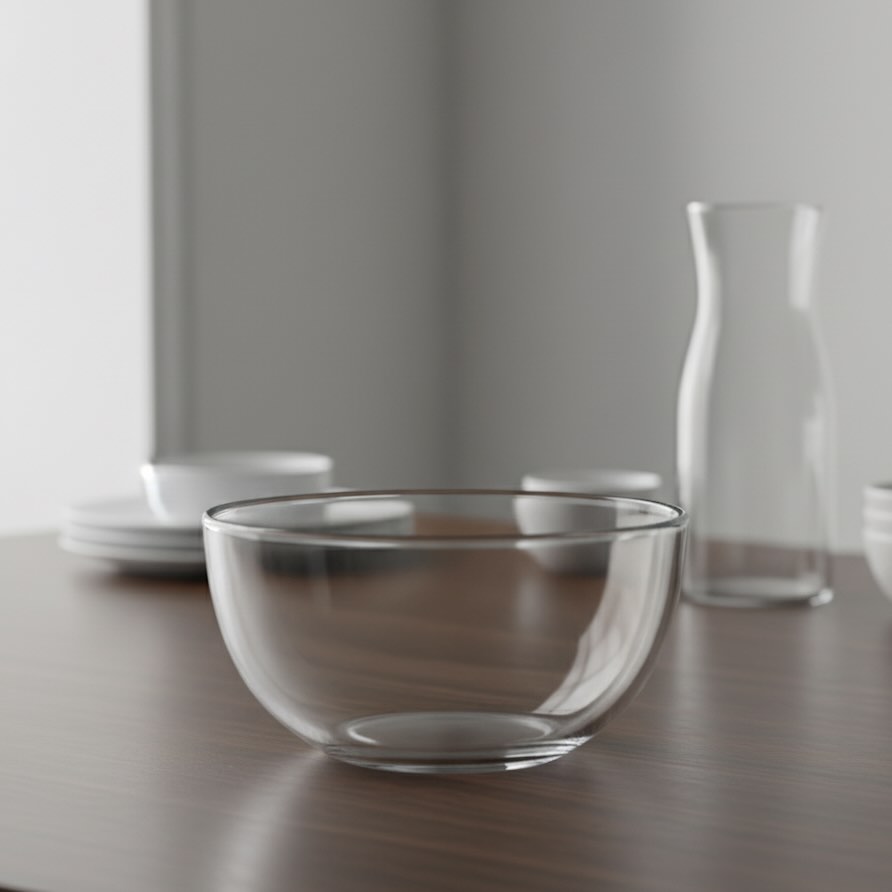
Every time you mix ingredients for a meal, the bowl touching your food matters more than you might realize. Plastic bowls can leach chemicals into your ingredients, especially when handling acidic foods like tomato sauce or warm mixtures. Metal bowls may react with certain ingredients, affecting flavor and potentially transferring metals into your food. Ceramic bowls often hide lead or other heavy metals in decorative glazes.
If you're committed to reducing toxic exposures in your kitchen while ensuring the purest food preparation possible, glass mixing bowls represent the safest, most versatile option available. These transparent vessels provide completely inert food contact that won't compromise your ingredients' integrity or your family's health.
Glass mixing bowls have remained kitchen staples for generations because they simply work—and work safely. The complete non-reactivity means no ingredient interactions or flavor alterations. The transparency lets you monitor mixing progress and see layered ingredients clearly. Tempered glass versions withstand temperature extremes from freezer to oven, making them incredibly versatile. They're dishwasher-safe, microwave-safe, and won't absorb odors or stains like plastic alternatives. While breakage concerns exist, quality tempered glass bowls prove remarkably durable with reasonable care. This comprehensive guide explores why glass mixing bowls deserve their essential status in health-conscious kitchens, covering the science of glass as a material, real user experiences, safety advantages, and how these transparent bowls compare to other options. You'll discover why investing in quality glass mixing bowls is one of the smartest decisions you can make for your kitchen.
The science behind glass mixing bowls starts with understanding tempered glass. Regular glass can shatter into dangerous shards when broken. Tempered glass undergoes a heating and rapid cooling process that creates compression on the surface and tension inside. This mechanism makes the glass approximately four times stronger than regular glass. If tempered glass does break, it fractures into small, relatively harmless granules rather than dangerous shards.
Quality glass mixing bowls use this tempered soda-lime glass for safety and durability. The tempering process allows these bowls to handle thermal shock—sudden temperature changes that would crack regular glass. The promise is mixing bowls that transition safely from refrigerator to microwave to dishwasher without concern. This versatility makes glass bowls truly essential kitchen tools.
The most important property of glass mixing bowls is complete chemical inertness. Glass consists primarily of silica (sand) that's been melted and formed into stable, non-porous surfaces. The mechanism of this non-reactivity involves glass's molecular structure—the silica network doesn't interact with acids, bases, fats, or other food components. Nothing from the glass transfers into your food, and nothing from your food penetrates or damages the glass.
This makes glass mixing bowls ideal for every ingredient and recipe. Acidic ingredients like lemon juice, vinegar, or tomatoes don't react with glass surfaces. The promise extends to flavor purity—glass never imparts metallic tastes or off-flavors to your food. What you mix in glass bowls tastes exactly as it should, without container interference.
Understanding glass bowls' temperature capabilities reveals their exceptional versatility. Quality tempered glass mixing bowls safely handle temperatures from approximately 0°F (freezer) to 450-500°F (oven), depending on manufacturer specifications. The mechanism involves the tempered structure's ability to distribute thermal stress evenly, preventing the fractures that would destroy regular glass under similar conditions.
For home cooks, this temperature range proves invaluable. You can prepare cold desserts directly in glass bowls and freeze them. The same bowls work for mixing ingredients at room temperature, then heating in the microwave or even baking in the oven. Glass mixing bowls function as genuinely multi-purpose vessels that adapt to whatever your recipes require.
The see-through nature of glass mixing bowls provides practical advantages beyond aesthetics. The transparency mechanism is straightforward—glass transmits light, allowing you to see contents from all angles. This visibility helps you monitor ingredient incorporation, check when egg whites reach proper peaks, or admire beautiful layered desserts.
The promise includes more confident cooking and baking. You can see if dry ingredients remain unmixed at the bottom. You can watch marinades coating meat evenly. You can identify when dough has risen to the perfect level. Glass mixing bowls essentially provide a window into your food preparation process, improving results through better visual feedback.
When you first handle quality glass mixing bowls, several characteristics indicate good construction. The rim should be smooth and rounded, comfortable against your arm during extended mixing. The base should sit flat and stable on counters. The glass should appear clear without cloudiness, bubbles, or imperfections. Quality tempered glass bowls feel substantial—thick enough to indicate durability without being excessively heavy.
Reviews across Amazon and kitchenware forums emphasize these quality indicators. Users describe premium glass bowls as "clearly well-made," "nicely weighted without being cumbersome," and "smooth and comfortable to handle." The immediate results of choosing quality include more enjoyable food preparation experiences and confidence in your tools' durability.
The critical performance metric for mixing bowls is functionality across diverse tasks. Glass mixing bowls excel in nearly every application. They're perfect for mixing batters and doughs with visual confirmation of ingredient incorporation. They work beautifully for marinating meats—the non-reactive surface won't be affected by acidic marinades. They're ideal for serving salads, displaying their contents attractively.
Reddit's cooking communities share extensive performance feedback. Home cooks report glass bowls handling everything from whisking eggs to kneading bread dough effectively. The stable bases prevent tipping during vigorous hand mixing. The smooth interiors release dough and batter cleanly. Glass mixing bowls deliver reliable, versatile performance that meets virtually any cooking or baking need.
One of glass bowls' most valuable features is safe microwave use. Unlike metal or bowls with metallic trim, glass mixing bowls heat food without sparking or damage. The transparency lets you monitor heating progress. The non-reactive surface means no chemical leaching when heating acidic or fatty foods. Users appreciate this convenience for reheating leftovers or melting chocolate directly in the mixing bowl.
Many tempered glass bowls also work in conventional ovens for baking or warming. This extends their utility dramatically. You can mix bread pudding or casserole ingredients directly in a glass bowl, then bake in the same vessel. The immediate results include fewer dishes to wash and more efficient kitchen workflows.
Extended use reveals glass mixing bowls' true durability when properly handled. Reviews from long-term users provide valuable longevity insights. Quality tempered glass bowls often last 10-20+ years with normal use. Unlike plastic that stains and scratches or metal that dents, glass maintains its appearance and functionality indefinitely. The only failure mode is breakage, which proper handling largely prevents.
Key performance observations from user reviews:
The hands-on experience confirms glass mixing bowls as kitchen essentials that deliver reliable, long-lasting performance across all food preparation tasks.

The safety case for glass mixing bowls centers on absolute non-reactivity. Glass is one of the most chemically stable materials available for food contact. The mechanism involves glass's molecular structure—silica networks that don't break down or interact with food components. No chemicals leach from glass into your ingredients under any normal use conditions.
This contrasts sharply with plastic mixing bowls that can release BPA, phthalates, and other chemicals into food. Even "BPA-free" plastics often contain replacement chemicals with limited safety data. Non-toxic glass bowls eliminate these concerns entirely. The inert surface provides the purest possible food contact, ensuring your ingredients remain uncontaminated by container chemicals.
Unlike some ceramic or decorative bowls, quality glass mixing bowls contain no lead, cadmium, or other heavy metals. Plain glass consists primarily of silica (sand), soda (sodium carbonate), and lime (calcium oxide)—naturally occurring, non-toxic materials. The mechanism of glass formation fuses these components into stable structures that won't leach metals even when in contact with acidic foods.
Non-toxic glass bowls provide confidence that you're not exposing your family to heavy metals through food preparation. This safety consideration particularly matters for mixing acidic ingredients that could leach metals from questionable ceramic glazes. Glass mixing bowls represent truly clean, safe vessels for all food preparation.
Glass's behavior at various temperatures affects safety considerations. Quality tempered glass mixing bowls handle thermal stress safely without releasing chemicals. Unlike plastics that may leach more chemicals when heated, glass remains completely stable across its entire temperature range. The mechanism involves glass's fixed molecular structure that doesn't break down or off-gas under heat.
This makes glass mixing bowls safe for hot liquids, microwave heating, and even oven use within rated temperatures. You never need to worry about plastic chemicals leaching into warm ingredients. Non-toxic glass maintains complete safety regardless of food temperature, providing peace of mind across all cooking applications.
An emerging safety concern with plastic containers is microplastic shedding. Research increasingly shows that plastic containers and utensils release tiny plastic particles into food, especially when scratched or subjected to heat. These microplastics enter your body and may accumulate with unknown long-term health effects.
Glass mixing bowls completely eliminate microplastic exposure:
Non-toxic glass mixing bowls provide the cleanest possible food preparation environment, free from both chemical leaching and microplastic contamination concerns.
When you prepare meals for your family, every surface touching your ingredients represents a potential exposure pathway. Children's developing bodies are particularly vulnerable to chemical exposures from food contact materials. Glass mixing bowls eliminate concerns about plasticizers, heavy metals, or synthetic compounds leaching into your family's food. The completely inert material provides pure, safe food preparation.
Kids' safety improves with glass bowls in multiple ways. The transparency lets children see ingredients clearly when helping cook, making the process more engaging and educational. The stable bases prevent tipping accidents during enthusiastic mixing. The non-toxic composition means even if glass bowls contain ingredients left out accidentally, no harmful chemicals leach into the food.
Glass mixing bowls serve diverse family needs beyond just mixing. They work beautifully for serving salads, pasta, or side dishes at family dinners. The attractive transparency makes food look appealing, encouraging children to eat. You can store leftovers directly in glass bowls with fitted lids, eliminating transfer to storage containers.
Family use extends to food preparation teaching moments. Transparent glass bowls let children see chemical reactions like yeast activating or baking soda fizzing in vinegar. These visual lessons make cooking education more effective. Glass mixing bowls become tools for building kitchen skills across generations.
The microwave-safe nature of glass mixing bowls proves invaluable for busy families. You can defrost ingredients, melt butter, warm leftovers, or even make mug cakes directly in glass bowls. This convenience streamlines meal preparation significantly. Parents appreciate appliances and tools that reduce steps and cleanup.
The safety of microwaving food in glass versus plastic matters tremendously. Studies show plastic containers may leach more chemicals when microwaved. Glass mixing bowls eliminate this concern entirely, providing completely safe heating. Family use of glass for microwaving protects everyone from unnecessary chemical exposures.
The dishwasher-safe nature of glass mixing bowls simplifies cleanup—a critical consideration for families juggling multiple daily meals. Unlike some plastics that become cloudy or retain odors after repeated dishwashing, glass emerges perfectly clean and clear every time. The non-porous surface doesn't harbor bacteria in scratches like plastic can.
Family usability features that matter:
Family use of glass mixing bowls creates healthier, more efficient kitchens where food preparation stays truly clean from start to finish.
Glass mixing bowls span moderate price ranges with good options at multiple price points. Budget sets cost $15-25 for 3-5 basic bowls. Mid-range options run $30-50 for quality tempered glass with better construction. Premium sets reach $60-100+ for brands like Pyrex with extensive size ranges, fitted lids, and guaranteed quality.
Where to buy affects both price and quality assurance. Pyrex and Anchor Hocking dominate the market with reliable, well-reviewed products available at most retailers. Amazon offers extensive selection with user reviews. Target, Walmart, and kitchen specialty stores stock multiple brands. Restaurant supply stores sometimes offer excellent values on commercial-quality glass bowls.
Evaluating glass mixing bowls' value requires comparing them to alternatives. Plastic mixing bowls cost $10-20 for sets but need replacement every few years as they stain, scratch, and absorb odors. Stainless steel bowls run $25-50 for quality sets and last longer but lack microwave functionality. Ceramic bowls cost $30-60+ and may contain lead or break more easily.
Glass mixing bowls offer excellent value through their combination of safety, versatility, and longevity. The initial cost exceeds cheap plastic but delivers decades of service. The microwave-safe feature adds utility that metal lacks. The guaranteed non-toxic nature provides peace of mind that ceramic may not.
The true value of glass mixing bowls emerges through long-term use. Quality tempered glass bowls literally last decades when properly handled. Many families use Pyrex bowls inherited from parents or grandparents—50+ year-old bowls still functioning perfectly. The only replacement need comes from breakage, which proper handling largely prevents.
Calculate the cost per use for perspective. A $40 glass mixing bowl set used three times weekly for 20 years gets approximately 3,000 uses. That's roughly $0.013 per use—essentially free. Even factoring in occasional breakage replacement, glass mixing bowls represent exceptional long-term value for kitchen essentials.
The value proposition of glass mixing bowls includes multiple factors beyond simple purchase price. The health benefit of avoiding plastic chemicals has real though unquantifiable value. The convenience of microwave and oven use saves time and reduces dish use. The visual appeal enhances your kitchen and food presentation.
Maximizing glass mixing bowl value:
The price of glass mixing bowls represents solid value for health-conscious households. The combination of complete safety, exceptional versatility, and decades-long durability justifies the moderate investment in these kitchen essentials.
The most significant comparison for health-conscious cooks is glass mixing bowls versus plastic alternatives. Plastic bowls dominate many kitchens through low cost and light weight. However, plastic leaches chemicals into food, especially with acidic or warm ingredients. Plastic stains permanently, absorbs odors, scratches easily, and eventually cracks or clouds. Microplastic shedding represents an emerging concern.
Glass mixing bowls vastly outperform plastic in every category except breakage resistance and weight. The complete non-toxicity eliminates chemical concerns. The permanent clarity and stain resistance maintain appearance indefinitely. The microwave-safe functionality adds versatility. For families prioritizing health, glass bowls clearly win despite requiring more careful handling than plastic.
Comparing glass mixing bowls to stainless steel reveals distinct trade-offs. Stainless steel bowls are virtually indestructible, lighter than glass, and perfectly suited for whisking over double boilers. However, steel bowls can't be microwaved, don't allow visual monitoring of contents, and may react slightly with highly acidic ingredients over extended contact.
Glass mixing bowls match steel's safety while adding microwave capability and transparency. Steel wins on durability and lightness. Both materials are non-toxic, dishwasher-safe, and long-lasting. Many serious cooks keep both—steel for specific applications like whipping egg whites and glass for general mixing, serving, and microwave use.
Ceramic bowls offer beautiful aesthetics and good heat retention. However, ceramic presents safety concerns that glass avoids. Decorative glazes may contain lead or cadmium—heavy metals that leach into food, especially with acidic ingredients. Ceramic also breaks more easily than tempered glass when dropped. The opaque nature prevents visual monitoring during mixing.
Glass mixing bowls provide comparable utility with superior safety assurance. Plain glass contains no heavy metals or questionable glaze components. Tempered glass is actually more break-resistant than ceramic. The transparency aids cooking technique. Glass represents the safer, more practical choice despite ceramic's aesthetic appeal.
Among glass mixing bowls, certain brands dominate through decades of proven quality. Pyrex pioneered borosilicate glass cookware in 1915 and remains the category leader. Their tempered soda-lime glass bowls feature excellent durability and widespread availability. Anchor Hocking offers comparable quality at slightly lower prices with extensive size options.
OXO Good Grips produces glass bowls with thoughtful design additions like non-slip bases and easy-pour spouts. Luminarc and Duralex offer European-made alternatives with distinctive styling. The best glass mixing bowls for your kitchen depend on priorities:
Quality glass mixing bowls from any reputable manufacturer will deliver decades of safe, versatile service as genuine kitchen essentials.

Glass mixing bowls offer compelling benefits that establish them as genuine kitchen essentials. The complete non-toxicity eliminates chemical leaching concerns that plague plastic alternatives. The transparency provides visual monitoring of mixing progress and showcases beautiful layered desserts. The microwave and oven safety expands functionality dramatically compared to metal bowls. The dishwasher-safe cleanup maintains perfect clarity through decades of use.
Practical advantages extend throughout daily cooking. Glass bowls never stain, absorb odors, or retain flavors between uses. The stable construction prevents tipping during vigorous mixing. The non-reactive surface works perfectly with acidic ingredients without imparting flavors. The exceptional longevity means bowls purchased today could serve your grandchildren. For health-conscious families, glass mixing bowls represent the optimal combination of safety, versatility, and durability.
Glass mixing bowls have one significant drawback: breakage potential. Unlike plastic or metal alternatives, glass can shatter if dropped on hard surfaces. This requires more careful handling and storage. The weight is greater than plastic, making large glass bowls filled with heavy ingredients more cumbersome. Glass can't transition from freezer directly to hot oven—you need gradual temperature adjustment to prevent thermal shock.
Cost represents another consideration. Quality glass mixing bowls cost more initially than plastic alternatives. Very large glass bowls become quite heavy when filled. The opacity of colored glass options eliminates the transparency advantage. These limitations are real but manageable for most households who value glass's substantial benefits.
For any household prioritizing health, safety, and quality in kitchen equipment, glass mixing bowls are absolute essentials. We strongly recommend investing in quality tempered glass bowls from established brands like Pyrex or Anchor Hocking. Purchase a nested set of 3-5 bowls in graduated sizes to handle everything from whisking single eggs to mixing large salads.
Choose sets with fitted lids to expand utility for storage and transport. Handle your glass bowls with appropriate care—don't drop them or subject them to extreme thermal shock. Hand-wash or load carefully in dishwashers to prevent impact damage. These simple precautions preserve your glass mixing bowls for decades of reliable service.
Transitioning to glass mixing bowls doesn't require replacing everything overnight. Begin by purchasing one quality glass bowl set and relegating plastic bowls to non-food uses or disposal. Experience the difference glass makes in food preparation—the pure taste, visual clarity, and microwave convenience. Gradually build your collection as budget allows.
Consider your specific needs when selecting sizes. Small bowls (1-2 quarts) work for whisking eggs and mixing dressings. Medium bowls (2-4 quarts) handle most everyday tasks. Large bowls (4-6 quarts) accommodate salads, batch baking, and serving. Very large bowls (8+ quarts) suit serious baking or entertaining needs.
Glass mixing bowls represent one of the wisest investments you can make in kitchen equipment. They're tools you'll use constantly, that will serve you reliably for decades, and that protect your family from unnecessary chemical exposures through completely inert food contact. The transparency enhances your cooking technique. The versatility streamlines your kitchen workflow. The safety provides genuine peace of mind.
Choose quality glass mixing bowls with confidence, knowing you're making a decision that benefits your cooking, your family's health, and your kitchen's long-term functionality. These truly essential tools deserve their place in every health-conscious kitchen, delivering superior performance and complete safety through generations of use.
* AI Disclosure: This article was developed with the assistance of AI language models, which aided in research, drafting, and/or editing. We strive for accuracy, but AI-generated content can occasionally contain errors. We recommend you double-check and verify information before making decisions based on this content.