Explore the ultimate silicone baking mats for simple, instant non-stick results. See how this new tool transforms your baking.
Tchiki Davis, M.A., Ph.D.
*This post may contain affiliate links. If you click and make a purchase, we may earn a small commission at no extra cost to you.
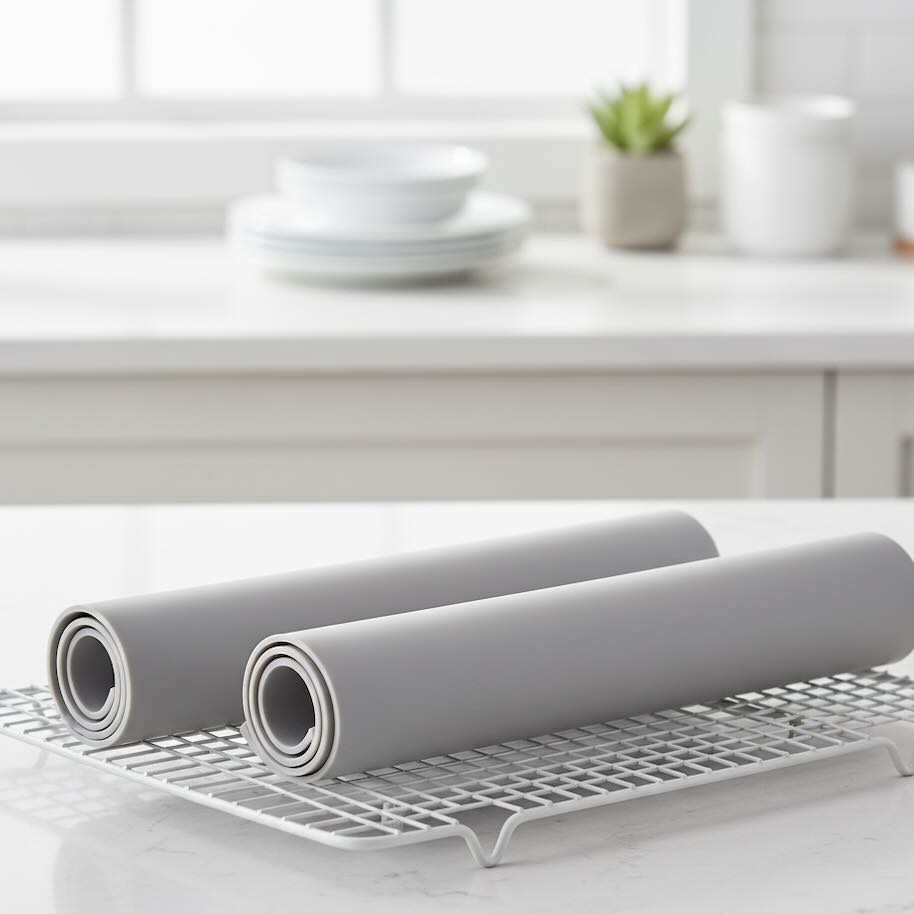
Every time you bake cookies, roast vegetables, or prepare any sheet-pan meal, you're likely reaching for parchment paper or aluminum foil. These single-use products create constant waste while potentially introducing unwanted substances into your food. Parchment paper often contains chemical coatings like quilon (containing heavy metals) or silicone treatments of unknown origin. Aluminum foil may leach small amounts of aluminum into acidic or salty foods.
If you're committed to reducing both waste and toxic exposures in your kitchen, silicone baking mats offer a reusable alternative that addresses these concerns while delivering excellent non-stick performance for thousands of uses.
Silicone baking mats have transformed how health-conscious bakers approach their craft. These flexible, heat-resistant sheets replace disposable parchment paper and foil with durable surfaces that last for years. Quality food-grade silicone withstands temperatures up to 480°F, provides natural non-stick properties without chemical coatings, and cleans easily for immediate reuse. The environmental benefits are substantial—one silicone baking mat replaces thousands of sheets of parchment paper, dramatically reducing kitchen waste. However, not all silicone mats are created equal, and understanding quality differences is crucial for safety and performance. This comprehensive silicone baking mats review explores everything you need to know—from the science of silicone as a material to real baker experiences, safety considerations for various products on the market, and how these reusable mats compare to traditional baking surfaces.
The science behind silicone baking mats begins with understanding silicone itself. Silicone is a synthetic polymer made from silicon (derived from sand), oxygen, carbon, and hydrogen. The mechanism of creating food-grade silicone involves bonding silicon with oxygen to form siloxane chains, then adding organic groups to create flexible, heat-stable material. This molecular structure gives silicone its unique properties—heat resistance, flexibility, and non-stick characteristics.
Quality silicone baking mats use 100% food-grade silicone that meets FDA standards for food contact. This designation confirms the material has been tested for safety and won't leach harmful substances into food under normal baking temperatures. The promise of silicone mats is safe, reusable baking surfaces that perform reliably through thousands of uses without degrading.
Understanding how silicone baking mats handle extreme temperatures reveals their exceptional utility. Silicone's molecular bonds remain stable across a wide temperature range—typically from -40°F to 480°F for quality mats. The mechanism involves strong silicon-oxygen bonds that don't break down under heat like plastic polymers do. This stability means silicone mats won't melt, warp, or release chemicals when exposed to normal baking temperatures.
The promise extends to versatility. You can use the same silicone baking mat for freezing cookie dough, baking at 425°F, and everything in between. The material returns to its original shape regardless of temperature exposure. This heat resistance makes silicone mats genuinely multi-purpose reusable baking surfaces.
The non-stick nature of silicone baking mats occurs naturally rather than through applied coatings. The science involves silicone's low surface energy—liquids and fats don't bond strongly to silicone surfaces. This mechanism creates natural release properties without PFAS chemicals (like Teflon) or other questionable non-stick treatments. Food simply doesn't stick to properly manufactured silicone.
Quality silicone mats maintain this non-stick property indefinitely. Unlike coated pans where non-stick surfaces wear away, silicone's release properties are inherent to the material itself. The promise is permanent non-stick performance without chemical degradation or the need to replace worn coatings.
Most quality silicone baking mats incorporate fiberglass mesh for structural support. The mechanism involves embedding food-safe fiberglass within the silicone layer, creating a composite material. This reinforcement prevents excessive stretching, maintains flat surfaces, and extends mat longevity. The fiberglass core is completely encapsulated by silicone, eliminating any direct food contact.
Understanding this construction explains quality differences between mats. Pure silicone without reinforcement may be too flexible, wrinkling under heavy dough or sliding around pans. Properly reinforced silicone baking mats lie flat, stay in place, and maintain their shape through years of use. The science demonstrates that composite construction creates superior reusable baking surfaces.
When you first use silicone baking mats, several characteristics become immediately apparent. Quality mats feel substantial—not flimsy or overly flexible. They lie flat on baking sheets without curling at edges. The surface feels smooth and slightly tacky, providing enough grip to stay in place. The material has a distinctive feel—neither plastic-like nor rubbery, but uniquely silicone.
Reviews across Amazon consistently mention this quality feel. Users describe good silicone mats as "sturdy," "well-made," and "substantial without being rigid." The immediate results include confidence that these mats will perform reliably. Cheap silicone alternatives often feel thin, wrinkle easily, or slide around pans—red flags indicating inferior construction.
The critical performance metric for baking surfaces is how well they prevent sticking while browning food appropriately. Silicone baking mats excel at preventing sticking—cookies release perfectly, roasted vegetables lift off cleanly, and even delicate items like macarons separate without tearing. The non-stick performance surpasses parchment paper significantly.
Reddit's baking communities share detailed performance feedback. Home bakers report that silicone mats eliminate the need for additional grease in most applications. Cookies spread predictably and release perfectly. Roasted vegetables don't stick at all. The reusable surfaces deliver consistent results across thousands of uses without performance degradation.
One consideration with silicone baking mats is their effect on browning. Silicone insulates slightly more than parchment paper or direct pan contact. This mechanism means foods may brown less on the bottom when using silicone mats. For some applications, this is beneficial—preventing over-browning. For others, like achieving crispy cookie bottoms, it may require temperature or time adjustments.
Users consistently report this browning difference in reviews. Most adapt easily by extending baking time 1-2 minutes or increasing temperature by 15°F. The immediate results are still excellent—just slightly different from parchment paper. Many bakers actually prefer the more even browning silicone mats provide, preventing burned bottoms.
Extended use reveals the true quality of silicone baking mats. Reviews from long-term users provide valuable longevity insights. Quality mats from brands like Silpat typically last 5-10+ years with regular use. The material doesn't degrade, crack, or lose non-stick properties over time. Proper care—avoiding sharp utensils and storing flat—maximizes lifespan.
Key performance observations from experienced users:
The hands-on experience confirms that quality silicone baking mats deliver exceptional, long-lasting performance that justifies ditching disposable parchment paper permanently.

The safety of silicone baking mats depends entirely on using genuine food-grade silicone. FDA regulations establish standards for materials contacting food, including maximum levels of volatile compounds that can migrate into food. Quality silicone mats meet these standards, having been tested to confirm safe use at baking temperatures. The non-toxic designation means the material won't leach harmful substances under normal use.
However, not all products marketed as "silicone" meet these standards. Some cheap mats use low-grade silicone or silicone-plastic blends that may contain fillers or additives. These questionable products could potentially release substances you don't want in your food. Non-toxic silicone baking mats from reputable manufacturers clearly state their FDA compliance and food-grade status.
Understanding how to verify genuine silicone helps you avoid unsafe products. The "pinch and twist test" provides a simple home verification method. Pinch and twist a section of the mat—if it turns white, the material contains fillers and isn't pure silicone. Pure food-grade silicone maintains its color when twisted. This mechanism reveals the material's composition without laboratory testing.
Another indicator is smell. Quality silicone baking mats have virtually no odor, even when new and especially when heated. Strong chemical or plastic smells indicate low-quality materials that shouldn't contact food. Non-toxic mats from reputable brands pass these simple tests, confirming their purity and safety.
The safety of silicone baking mats extends to their temperature tolerances. Quality mats are rated to specific maximum temperatures—typically 480°F for standard silicone mats. Exceeding these temperatures can cause degradation and potentially release compounds. The mechanism involves breaking silicon-oxygen bonds under excessive heat, though this requires temperatures well above normal baking.
Following manufacturer temperature guidelines ensures safe use. Most home baking occurs at 325-450°F, well within safe ranges. Broiling or using commercial ovens above 500°F may exceed mat ratings. Non-toxic use requires respecting these limits to prevent any possibility of material breakdown.
Beyond FDA approval, some silicone baking mats carry LFGB certification—a rigorous German standard for materials contacting food. LFGB testing is more comprehensive than FDA requirements, including tests for volatile compounds, heavy metals, and other potential contaminants. Mats meeting this standard represent the highest verified safety level.
Safety features of quality silicone baking mats:
Non-toxic silicone baking mats from quality manufacturers provide genuinely safe, reusable alternatives to questionable parchment paper coatings or aluminum foil.
When you bake treats for your family, especially children, every material touching your food matters. Parchment paper often contains quilon (heavy metal-based) or silicone coatings of unknown origin. Some cheaper parchment uses bleaching processes that leave residues. Aluminum foil can leach into acidic or salty foods. Choosing certified silicone baking mats eliminates these concerns, providing verified non-toxic surfaces for family baking.
Kids' safety improves with reusable mats for another reason—you control exactly what they are. With disposable parchment, you depend on manufacturers' ever-changing formulations. Quality silicone baking mats from trusted brands maintain consistent composition. Family use of verified food-grade silicone creates predictable, safe baking conditions for every batch of cookies or roasted vegetables.
Silicone baking mats work beautifully when teaching children baking skills. The non-stick surface means children's creations release easily, encouraging their efforts. The reusable nature teaches sustainability—children learn that waste isn't necessary for successful baking. The heat-safe material stays cool on edges even when pulled from ovens, reducing burn risks during supervised baking.
Parents appreciate that silicone mats simplify children's baking projects. Less sticking means less frustration. Easy cleanup encourages kids to help with post-baking tasks. Non-toxic silicone baking mats support healthy family activities while teaching valuable skills and environmental awareness.
For families relying on batch cooking and meal prep, silicone baking mats dramatically improve efficiency. You can roast multiple sheet pans of vegetables simultaneously, each on its own reusable mat. The easy release means transferring food to storage containers is quick. The simple cleanup—often just wiping clean—eliminates the tedious process of scrubbing stuck-on food from bare sheet pans.
Family use extends to diverse cooking applications. Use silicone mats for baking breakfast cookies, roasting dinner vegetables, preparing sheet-pan meals, and even rolling out dough. The versatility of quality reusable baking surfaces supports efficient family cooking systems.
Unlike stacks of parchment paper boxes cluttering cabinets, silicone baking mats store efficiently. Most mats are designed to lie flat or roll loosely for storage. Two or three mats serve all your baking needs without consuming significant cabinet space. This organization benefit matters tremendously in family kitchens where space is precious.
Family usability features:
Family use of silicone baking mats simplifies kitchen management while supporting healthier, more sustainable cooking practices that benefit everyone in the household.

Silicone baking mats range from budget to premium pricing. Cheap no-name mats cost $8-15 for sets of 2-3. Mid-range quality mats run $20-30 for pairs. Premium brands like Silpat command $25-40 per mat. This initial investment exceeds single boxes of parchment paper but represents dramatically different value when calculating cost over time.
Where to buy affects both price and quality assurance. Amazon offers extensive selection but requires careful review reading to identify genuine food-grade products. Kitchen specialty stores stock quality brands with knowledgeable staff. Restaurant supply stores sometimes offer commercial-grade silicone baking mats at competitive prices. Brand websites ensure authenticity when buying premium products.
The value proposition of silicone baking mats becomes clear through comparison to disposable alternatives. A quality $25 silicone mat lasts approximately 2,000-3,000 uses. Compare this to parchment paper at roughly $0.05-0.15 per sheet. Using parchment twice weekly costs $5-15 annually, reaching $50-150 over ten years. Your single $25 silicone mat delivers the same function for a fraction of the long-term cost.
The environmental value amplifies financial savings. One reusable baking mat replaces thousands of sheets of disposable parchment, eliminating significant waste. For families prioritizing sustainability, this environmental benefit has real value beyond simple dollars. Silicone baking mats align financial and environmental interests perfectly.
Breaking down actual cost per use reveals remarkable value. A $25 silicone mat used 200 times annually for ten years provides 2,000 uses at approximately $0.0125 per use. This dramatically undercuts parchment paper's $0.05-0.15 per use. Even accounting for higher initial investment, silicone mats pay for themselves within 6-18 months depending on usage frequency.
Quality matters significantly for achieving this value. Cheap $8 silicone mats that last only 500 uses before degrading deliver similar cost-per-use as parchment paper without environmental benefits. Investing in proven brands ensures the longevity that makes reusable baking mats genuinely economical.
Understanding when silicone baking mats "pay for themselves" helps justify the initial purchase. For weekly bakers using parchment twice weekly, a $25 mat replaces approximately $10-20 in annual parchment costs. The investment recovers in 1-2 years with 8+ years of additional free use ahead. For serious bakers using mats daily, recovery happens in just months.
Maximizing silicone mat value:
The price of quality silicone baking mats represents genuine long-term value. The combination of safety, performance, sustainability, and cost savings makes these reusable surfaces one of the smartest kitchen investments possible.
The fundamental comparison is silicone baking mats versus traditional parchment paper. Parchment offers convenience—use once, toss away. No cleaning required. However, this disposability creates constant waste and ongoing expense. Parchment paper often contains questionable coatings including quilon (containing heavy metals) or silicone of unknown origin. Quality and safety vary dramatically between brands and even batches.
Silicone baking mats outperform parchment across nearly every metric except convenience for occasional bakers. The reusable surfaces eliminate waste and long-term costs. Food-grade silicone provides verified safety without unknown coatings. Non-stick performance exceeds most parchment papers. For regular bakers, silicone mats clearly win this comparison. For those baking monthly or less, parchment's convenience might justify its drawbacks.
Comparing silicone baking mats to aluminum foil reveals significant advantages. Foil creates waste with every use. It may leach small amounts of aluminum into acidic or salty foods—a concern for those minimizing metal exposures. Foil provides no non-stick properties without added grease. The crinkled surface doesn't provide smooth, even baking surfaces like silicone mats.
Reusable silicone surfaces vastly outperform aluminum foil for most baking applications. The non-stick property eliminates added fats. The safety is superior—no metal leaching concerns. The environmental impact is dramatically lower. Foil retains advantages for specific applications like tent-covering roasts or lining slow cookers, but for sheet-pan cooking and baking, silicone wins decisively.
Among silicone baking mats, Silpat dominates as the original premium brand. Founded by French baker Guy Demarle in the 1960s, Silpat pioneered silicone baking mat technology. Their products carry LFGB certification and rigorous quality control. Silpat mats cost $25-40 each—premium pricing that reflects proven performance and safety.
Generic silicone mats from Amazon brands cost $8-20 for pairs. Quality varies dramatically. Some deliver solid performance approaching Silpat at lower cost. Others use questionable materials, degrade quickly, or fail the pinch-twist test for pure silicone. The comparison shows trade-offs between guaranteed quality (Silpat) and potential value (carefully selected generics).
Choosing between silicone baking mat brands requires weighing multiple factors. Silpat offers proven quality with premium pricing. AmazonBasics provides decent quality at budget prices with easy returns. Mrs. Anderson's splits the difference with reliable performance at moderate cost. The best mats for your kitchen depend on priorities:
Quality silicone baking mats from any reputable source will dramatically outperform disposable parchment while delivering long-term value through thousands of reuses.

Silicone baking mats offer overwhelming benefits that make them superior to disposable alternatives for regular bakers. The reusable nature eliminates waste from thousands of parchment sheets over the mats' lifetime. The verified food-grade silicone provides non-toxic baking surfaces free from questionable paper coatings or metal leaching. The natural non-stick properties work without added fats or chemical treatments. The heat resistance handles all normal baking applications safely.
Financial advantages accumulate over time. After recovering initial investment in 6-18 months, silicone mats deliver essentially free non-stick surfaces for years. The environmental impact is dramatically lower than disposable alternatives—one mat replaces thousands of paper sheets. Cleanup is simple—usually just wiping clean. Storage is efficient compared to bulky parchment boxes. For health-conscious bakers, quality reusable mats check every important box.
Silicone baking mats have some drawbacks worth acknowledging. The initial investment of $20-40 per mat feels significant compared to $5 parchment boxes. Quality varies dramatically between brands—cheap mats may contain fillers or degrade quickly. The insulating effect causes slightly different browning than parchment, requiring minor recipe adjustments. Mats require cleaning rather than simply discarding like paper.
Other considerations include storage space—mats must lie flat or roll loosely rather than folding like paper. Sharp utensils damage mats permanently. Extreme temperatures above rating (>480°F) can degrade material. For occasional bakers using sheets monthly, the convenience of disposable parchment might outweigh silicone's benefits. These limitations are real but minor compared to advantages for regular bakers.
For anyone baking weekly or more, silicone baking mats are essential investments that pay for themselves quickly while delivering superior performance. We strongly recommend purchasing 2-3 quality mats from proven brands like Silpat, Mrs. Anderson's, or carefully vetted Amazon options with strong reviews. Verify food-grade certification and conduct the pinch-twist test to confirm pure silicone.
Start using your silicone baking mats for all standard baking and roasting applications. Adjust recipes slightly if needed—usually just 1-2 minutes longer or 15°F hotter to achieve desired browning. Clean mats promptly after use with warm soapy water or dishwasher. Store flat in a cabinet or rolled loosely in a drawer. With proper care, quality mats serve you reliably for 5-10+ years.
Transitioning from parchment paper to silicone baking mats doesn't require perfection immediately. Purchase one quality mat and use it alongside parchment initially. Experience the performance difference—better non-stick, easy cleanup, and satisfaction from reducing waste. Once comfortable, add additional mats until you rarely reach for disposable alternatives.
Accept that some applications work better with parchment—lining cake pans, wrapping baked goods, or disposable surfaces for gifted treats. Silicone mats excel for sheet-pan cooking and baking where you control the product start to finish. This balanced approach maximizes benefits while maintaining practical flexibility.
Silicone baking mats represent one of the best investments health-conscious bakers can make. They reduce toxic exposures from questionable parchment coatings, eliminate ongoing costs and waste, and deliver superior non-stick performance through thousands of uses. The initial investment pays itself back quickly while supporting both your family's health and environmental sustainability. Choose quality silicone baking mats with confidence, knowing you're making a decision that benefits your baking, your budget, and the planet for years to come. Ditch disposable parchment permanently and embrace reusable surfaces that serve you better in every measurable way.
* AI Disclosure: This article was developed with the assistance of AI language models, which aided in research, drafting, and/or editing. We strive for accuracy, but AI-generated content can occasionally contain errors. We recommend you double-check and verify information before making decisions based on this content.