Learn about toothpaste tablets and how they clean effectively while eliminating fluoride, SLS, and artificial ingredients from your daily oral care routine.
Tchiki Davis, M.A., Ph.D.
*This post may contain affiliate links. If you click and make a purchase, we may earn a small commission at no extra cost to you.
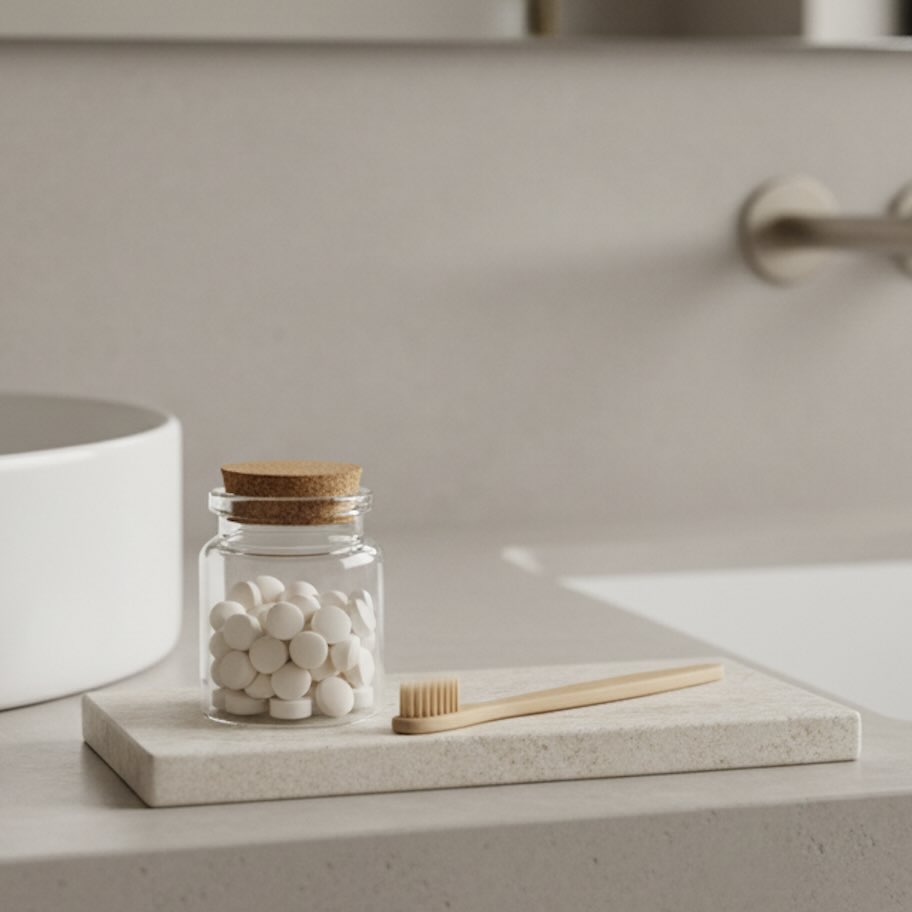
Your toothpaste tube contains more than you might realize. Conventional toothpastes often include sodium lauryl sulfate (a harsh foaming agent), artificial sweeteners, synthetic dyes, and preservatives like triclosan. Many contain fluoride levels that, while approved by dental associations, concern health-conscious consumers who prefer minimizing chemical exposures. The plastic tubes also create significant waste—over a billion toothpaste tubes end up in landfills annually, where they persist for centuries.
Toothpaste tablets offer a refreshing alternative that's gaining popularity among people seeking cleaner oral care. These small, chewable tablets transform into paste when you bite down and brush with a wet toothbrush. They deliver effective cleaning through natural abrasives and simple ingredients while eliminating unnecessary chemicals and plastic waste. The tablets come in reusable glass jars or compostable pouches, dramatically reducing environmental impact. Brands like Bite, Huppy, and Lush have pioneered this innovative format, creating formulas that clean teeth effectively while aligning with health and sustainability values. Whether you're motivated by ingredient concerns, environmental consciousness, or simply curiosity about this novel approach to oral care, toothpaste tablets deserve your attention. Let's explore how these tiny tablets work, what they taste like, and whether they truly deliver on their clean teeth promise.
Toothpaste tablets work through natural abrasives that mechanically remove plaque and surface stains when combined with brushing. The primary cleaning mechanism relies on mild abrasive particles like calcium carbonate or silica. When you chew the tablet and brush, these fine particles create gentle friction that scrubs away debris, bacteria, and stains without damaging tooth enamel.
The science behind these dental tablets centers on simplicity rather than complex chemical formulations. Most tablets contain just 8-12 ingredients compared to 20-30+ in conventional toothpastes. This minimalist approach eliminates questionable additives while maintaining effective cleaning. Xylitol, a natural sweetener derived from birch or corn, provides pleasant taste while actually inhibiting cavity-causing bacteria growth.
The mechanism of toothpaste tablets requires a slightly different technique than traditional paste. You chew the tablet to break it down, then brush with a wet toothbrush as it transforms into foam. This process feels unusual initially but becomes second nature quickly. The chewing action also stimulates saliva production, which naturally helps clean teeth and neutralize acids.
The foam created by toothpaste tablets comes from natural sources rather than harsh surfactants like sodium lauryl sulfate (SLS). Some brands use sodium cocoyl glutamate, a gentle coconut-derived foaming agent. Others create minimal foam, which surprises users accustomed to conventional toothpaste's abundant bubbles. Less foam doesn't mean less cleaning—it simply indicates the absence of synthetic foaming agents.
Quality toothpaste tablets use ingredients you can pronounce and understand. Calcium carbonate provides gentle abrasion. Xylitol sweetens while fighting bacteria. Sodium bicarbonate (baking soda) neutralizes acids and helps remove stains. Essential oils like peppermint or spearmint provide flavor and have natural antimicrobial properties.
Some formulations include nano-hydroxyapatite, a naturally occurring mineral that makes up tooth enamel. This ingredient can help remineralize teeth and reduce sensitivity. It's considered a fluoride alternative for those seeking fluoride-free options while still supporting enamel health.
The toothpaste tablet market offers both fluoride and fluoride-free formulas. Fluoride supporters point to decades of research showing cavity prevention. Critics note concerns about fluoride accumulation and prefer alternatives like hydroxyapatite. Quality brands offer both options, allowing you to choose based on your personal health philosophy and dental needs.
Amazon reviews reveal that users are consistently impressed by how well toothpaste tablets clean teeth once they adjust to the format. Many reviewers describe their teeth feeling exceptionally clean and smooth after brushing with tablets. The Bite brand receives particular praise for its minty fresh taste and effective cleaning. Users mention that their dental hygienists notice cleaner teeth at checkups.
One Amazon reviewer shared that switching to Huppy toothpaste tablets eliminated their chronic canker sores, which they attributed to SLS in conventional toothpaste. Their teeth stayed just as clean without the irritation. Another Reddit user mentioned being skeptical initially but finding that the tablets cleaned better than their old paste while creating less bathroom mess.
The immediate taste experience with toothpaste tablets varies by brand. Bite's mint flavor receives consistent praise for tasting clean and refreshing without being overpowering. Huppy offers both mint and citrus options that users describe as pleasant and natural-tasting. Lush Toothy Tabs come in multiple flavors, though some find certain varieties too strongly flavored.
The texture requires adjustment for most users. You chew the tablet until it breaks down into a paste-like consistency. Some find this crunchy-then-creamy transition satisfying, while others need a few tries to get comfortable. The key is chewing thoroughly before brushing—rushed chewing leaves gritty pieces that feel unpleasant.
The cleaning performance of toothpaste tablets matches or exceeds conventional paste for most users. Teeth feel exceptionally smooth and clean after brushing. The absence of glycerin (a common toothpaste ingredient that can leave a coating) means your teeth feel truly clean rather than slippery. This authentic cleanliness is something many users notice and appreciate.
Stain removal works well with consistent use. Coffee and tea drinkers report that tablets maintain white teeth comparably to regular toothpaste. The natural abrasives provide enough polishing action without being overly harsh. Some users mention that baking soda-based tablets offer extra whitening benefits for surface stain removal.
After months of using toothpaste tablets, reviewers report no cavities or dental issues—their oral health remains excellent. Many mention reduced sensitivity compared to conventional toothpaste, possibly due to avoiding harsh SLS and other irritants. The fun novelty of the tablet format doesn't wear off; users genuinely enjoy the routine even after the newness fades.

The safety promise of toothpaste tablets centers on eliminating concerning ingredients found in conventional toothpastes. These dental tablets skip sodium lauryl sulfate (SLS), a harsh detergent linked to canker sores and mouth irritation. They avoid triclosan, an antibacterial agent associated with hormone disruption and antibiotic resistance. Most formulas exclude artificial sweeteners like saccharin and aspartame, using natural xylitol instead.
Quality toothpaste tablets also eliminate artificial colors and synthetic preservatives. The dry tablet format doesn't require the same preservatives that water-based paste needs. This natural preservation through formulation rather than chemical additives represents a significant safety advantage. The ingredients are straightforward: minerals, natural sweeteners, and plant-based flavoring.
Leading toothpaste tablet brands pursue certifications that verify their clean ingredient claims. Vegan and cruelty-free certifications are common, ensuring no animal testing or animal-derived ingredients. Some brands carry EWG verification or MADE SAFE certification, providing third-party confirmation of ingredient safety.
The absence of fluoride in many tablet formulations addresses concerns some people have about this mineral. While major dental associations support fluoride use, some consumers prefer avoiding it due to questions about optimal dosing and systemic accumulation. Hydroxyapatite-containing tablets offer an alternative approach to enamel support without fluoride.
The best toothpaste tablet brands list every ingredient on their packaging and websites. This complete transparency contrasts with conventional toothpastes that may contain undisclosed flavoring compounds or processing aids. When companies openly share their formulas, you can research individual ingredients and make truly informed decisions about your oral care.
Some tablets contain natural flavors, which can be vague. Quality brands specify the source—peppermint essential oil versus undefined "natural mint flavor." This level of detail indicates companies that prioritize transparency and consumer trust over proprietary secrecy.
Another safety consideration is the presence of microplastics in some conventional toothpastes. These tiny plastic particles were used for abrasion and visual appeal until consumer pressure led to their removal from most products. Toothpaste tablets have never contained microplastics, using natural mineral abrasives instead. This protects both your health and aquatic ecosystems where microplastics accumulate.
The clean ingredient profile of dental tablets makes them particularly appropriate for health-conscious consumers. You're not exposing your mouth's mucous membranes (which absorb substances efficiently) to synthetic chemicals multiple times daily. This reduced toxic burden adds up significantly over a lifetime of oral care.
Parents often wonder whether toothpaste tablets are appropriate for children. The answer depends on age and developmental stage. Most brands recommend tablets for ages 5+ when children can reliably chew and spit without swallowing. The dry format actually offers a safety advantage—there's no risk of squeezing out and swallowing large amounts of paste like young children sometimes do with tubes.
For families seeking to reduce chemical exposures, toothpaste tablets eliminate several concerning ingredients from daily oral care. Children's developing bodies are more vulnerable to synthetic chemicals. Choosing clean dental products protects them during crucial growth periods. The fun novelty of chewing a tablet often makes brushing more appealing to reluctant kids.
Toothpaste tablets work wonderfully for school-age children who've mastered the chew-and-brush technique. Kids enjoy the different format—it feels like a treat rather than a chore. Some parents use tablets as motivation for consistent brushing, with children excited to "chew their toothpaste." This positive association with oral hygiene can establish lifelong healthy habits.
For younger children under 5, conventional paste or tooth powder might be more appropriate. The chewing step requires coordination that toddlers are still developing. Always supervise young children during brushing regardless of product format. Consult your pediatric dentist about the best approach for your specific child's needs and developmental stage.
Pregnant and nursing mothers can confidently use toothpaste tablets. The natural ingredients pose no concerns during these sensitive periods. In fact, avoiding the synthetic chemicals in conventional toothpaste may be preferable when your body is supporting fetal development or producing breast milk. The absence of artificial sweeteners, SLS, and preservatives eliminates unnecessary exposures.
Some pregnant women experience increased gag reflexes, making toothpaste's strong mint flavor difficult to tolerate. Tablets in milder flavors or with less intense taste can help. The dry format means you're not dealing with oozing paste that might trigger nausea during morning sickness.
People with sensory sensitivities often prefer toothpaste tablets because they can control the intensity through chewing duration. Autistic individuals and others with texture issues sometimes find the tablet format more tolerable than the squeezed-paste sensation. The predictable, measured dose of one tablet also appeals to people who like consistency and routine.
Those with chemical sensitivities or multiple chemical sensitivity (MCS) appreciate the clean ingredient profile. The absence of synthetic fragrances, dyes, and other triggering compounds makes tablets accessible to people who react to conventional oral care products.

Toothpaste tablets typically cost $12-20 for a jar of 60-120 tablets, depending on brand and quantity. This works out to roughly $0.15-$0.30 per brushing, which is higher than conventional toothpaste's $0.05-$0.10 per use. The premium reflects natural ingredients, sustainable packaging, and often small-batch production. For many users, the health and environmental benefits justify the additional cost.
The per-use calculation shows that while tablets cost more than drugstore paste, the difference is modest—typically $10-20 extra annually for twice-daily brushing. This represents one of the more affordable upgrades in the natural products category. You're paying slightly more for significantly cleaner ingredients and dramatically reduced plastic waste.
You can find toothpaste tablets at natural grocers, some Target locations, and extensively online through Amazon, brand websites, and sustainable product retailers like EarthHero or Package Free Shop. Buying directly from brands often provides subscription options that reduce per-jar costs by 15-25% while ensuring you never run out.
Amazon offers convenient access to multiple brands with customer reviews to guide your selection. However, supporting direct-to-consumer brands through their websites helps small companies that prioritize health and sustainability over mass-market distribution. Many brands offer sample sizes or travel packets for trying before committing to full jars.
Budget-friendly options in toothpaste tablets include Huppy at roughly $12 for 62 tablets ($0.19 per use) and Lush Toothy Tabs starting around $10 for 60 tablets ($0.17 per use). Mid-range pricing includes Bite at $16 for 62 tablets ($0.26 per use) and Georganics at similar pricing. These brands balance quality ingredients with accessible pricing.
The cost difference between fluoride and fluoride-free versions is minimal within brands. You're not paying a premium for fluoride-free options—the pricing reflects overall ingredient quality and packaging rather than specific formulation choices. This allows you to choose based on your dental philosophy without financial penalty.
The true value of toothpaste tablets extends beyond per-use cost. You're eliminating daily exposure to harsh chemicals that contact your mouth's absorbent tissues. You're drastically reducing plastic waste—switching saves roughly 4-6 tubes annually from landfills. The reusable glass jars last for years with refill options from some brands.
The health investment in clean oral care compounds over decades. Your mouth's mucous membranes absorb substances efficiently, making ingredient quality particularly important for products you use multiple times daily. The modest price premium for tablets represents worthwhile protection of your long-term health.
When comparing toothpaste tablets to conventional paste, the ingredient and sustainability differences are dramatic. Traditional toothpastes contain numerous synthetic chemicals including SLS (harsh detergent), triclosan (antibacterial with health concerns), and artificial sweeteners. They come in plastic tubes that contribute to ocean pollution and landfill waste. Tablets eliminate these concerns while maintaining effective cleaning through natural ingredients.
Comparing toothpaste tablets to tooth powder offers interesting contrasts. Both formats avoid plastic tubes and offer natural ingredients. Powders cost less—typically $8-12 for 2-3 months' supply. However, powders can be messier to use, requiring dipping wet toothbrushes into jars or sprinkling onto brushes. Tablets offer more convenience and precise dosing while costing slightly more.
Bite toothpaste tablets represent one of the most popular clean oral care alternatives. The brand was founded by Lindsay McCormick, who was frustrated by the plastic waste and chemical ingredients in conventional toothpaste. Bite offers both fluoride and fluoride-free formulas with clean ingredients like calcium carbonate, xylitol, and natural mint. Customer reviews consistently praise the taste, cleaning effectiveness, and environmental impact.
Conventional toothpaste from brands like Crest and Colgate costs less upfront but exposes you to synthetic chemicals and creates plastic waste. The multi-decade research on fluoride toothpaste shows cavity prevention, which conventional brand supporters emphasize. However, Bite's hydroxyapatite formula offers an alternative approach to enamel support without fluoride exposure concerns.
Huppy toothpaste tablets provide another excellent option in the clean oral care category. The brand focuses on minimalist ingredients and playful branding that makes sustainable choices fun. Huppy tablets come in both mint and citrus flavors, appealing to people who dislike traditional mint toothpaste. The formula effectively cleans while avoiding all major concerning ingredients.
Tom's of Maine represents the "natural" option among conventional formats. While better than mainstream brands, Tom's still uses tubes (now recyclable through special programs) and contains some ingredients like SLS in certain formulas. Huppy's tablet format and cleaner ingredient list make it more aligned with strict natural standards, though Tom's offers the familiar squeeze-tube experience.
The sustainability advantages of toothpaste tablets over conventional tubes are substantial. One person using traditional toothpaste discards 4-6 plastic tubes annually. Most aren't recycled because they're small, hard to clean, and made of mixed materials. Tablets come in glass jars you refill or compostable pouches that break down naturally. This dramatic waste reduction represents meaningful environmental action.

Toothpaste tablets deliver effective cleaning through natural ingredients while eliminating concerning chemicals found in conventional toothpastes. These innovative dental tablets use gentle abrasives, natural sweeteners, and essential oils to clean teeth, freshen breath, and support oral health. The format significantly reduces plastic waste, making tablets ideal for environmentally conscious consumers. For people seeking cleaner oral care products, tablets offer a genuinely effective alternative to traditional paste.
The main advantage is ingredient quality. Toothpaste tablets skip sodium lauryl sulfate, triclosan, artificial sweeteners, and synthetic preservatives. You're using simple, transparent formulas that work with your body rather than exposing mouth tissues to questionable chemicals multiple times daily. The environmental benefits of eliminating plastic tubes create positive impact beyond personal health.
Dental tablets provide exceptionally clean teeth through natural abrasives and enzymes. Users consistently report that their teeth feel smoother and cleaner than with conventional paste. The absence of SLS reduces canker sores and mouth irritation for sensitive individuals. The fun format makes oral care more engaging, particularly appealing for children who resist traditional brushing.
The sustainable packaging dramatically reduces plastic waste—switching saves multiple tubes annually from landfills. The ingredient transparency allows informed decisions about what enters your body. Supporting innovative brands that prioritize health and environment creates market demand for better consumer products across all categories.
Toothpaste tablets cost more than conventional toothpaste—roughly $0.15-$0.30 per use versus $0.05-$0.10. This premium adds up to $10-20 extra annually per person. The chewing step requires adjustment; some people never grow comfortable with the texture and process. The format isn't appropriate for young children who can't reliably chew and spit.
Availability remains limited in physical stores compared to conventional toothpaste's universal presence. You'll likely need to order online initially, which requires planning ahead. Some tablets produce minimal foam, which feels odd if you associate bubbles with cleaning effectiveness. This perception takes time to overcome.
For most adults and children over 5, toothpaste tablets represent an excellent upgrade in oral care. Choose Bite if you want well-established formulas with both fluoride and fluoride-free options. Select Huppy for playful branding and citrus flavor alternatives. Try Lush Toothy Tabs if you're on a tighter budget and want to experiment with various flavors.
Start with a small jar or sample pack to ensure you like the format before buying larger quantities. Give yourself a week to adjust to the chewing technique and different sensory experience. Most people adapt quickly and genuinely prefer tablets after the transition period.
Toothpaste tablets clean your teeth effectively while aligning your oral care with your health and environmental values. The slightly higher cost is easily justified by cleaner ingredients and dramatically reduced plastic waste. Your mouth deserves products that support rather than compromise your wellbeing. These innovative tablets deliver exactly that while making tooth brushing a little more fun and a lot more sustainable.
* AI Disclosure: This article was developed with the assistance of AI language models, which aided in research, drafting, and/or editing. We strive for accuracy, but AI-generated content can occasionally contain errors. We recommend you double-check and verify information before making decisions based on this content.